
How to Choose Fire-Rated Partition Boards for Buildings
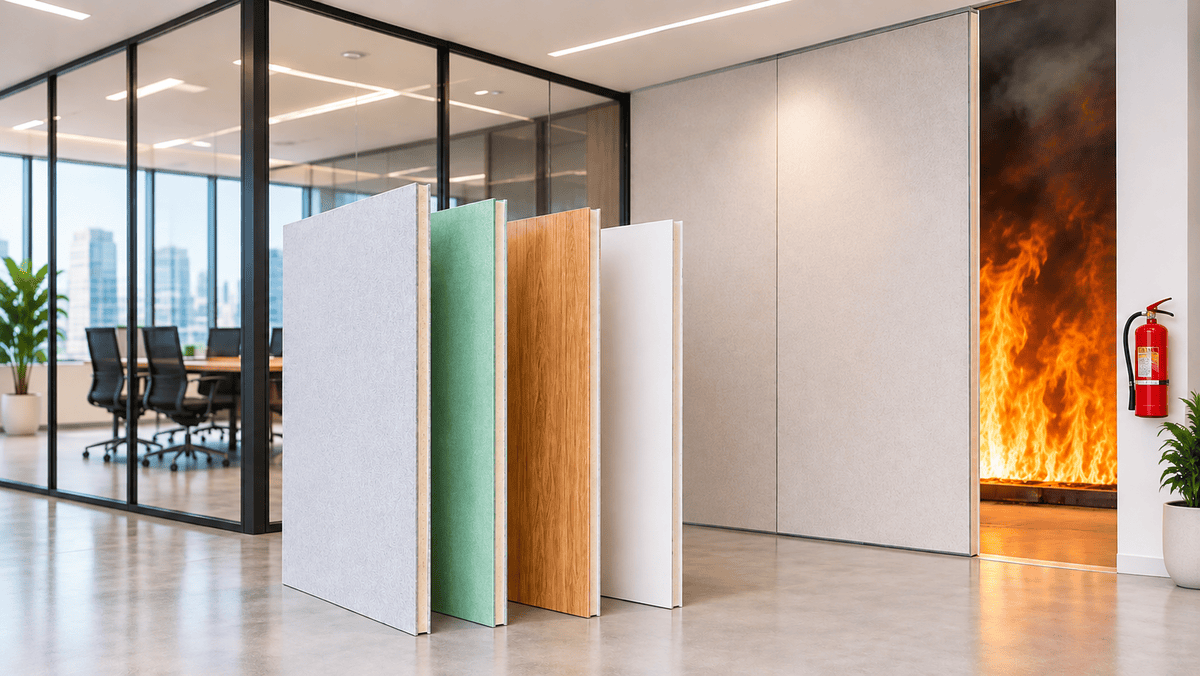
Fire safety is one of the most important considerations when designing and constructing a building. From office spaces and hospitals to hotels, schools, factories, and commercial complexes, every building needs suitable materials to help control the spread of fire. Choosing the right fire-rated partition boards can improve building safety while providing practical solutions for dividing interior spaces.
Fire-rated partition boards are specially designed building materials that help resist fire and slow its spread from one area to another. They are commonly used in drywall partition systems, service shafts, corridors, staircases, and other areas where fire protection is important.
However, not every partition board offers the same level of fire resistance. Factors such as board material, thickness, fire-resistance rating, installation method, and overall wall construction affect its performance.
So, how do you choose the right fire-rated partition board for your building?
In this guide, we explain the different types of fire-resistant partition boards, their benefits, important selection factors, and applications to help you make an informed decision.
What Are Fire-Rated Partition Boards?
Fire-rated partition boards are building boards used in partition wall systems designed to resist fire for a specified period. They help slow down the movement of flames and heat, giving occupants more time to evacuate and allowing emergency teams to respond.
These boards are commonly installed over metal framing systems to create non-load-bearing internal walls. Depending on the material and tested system design, they can provide different levels of fire resistance.
Common types of fire-resistant partition boards include:
- Fire-resistant gypsum boards
- Calcium silicate boards
- Fibre cement boards
- Other tested fire-protection board systems
Fire-rated partition boards are used in commercial buildings, healthcare facilities, educational institutions, hotels, industrial buildings, and residential projects.
Important: A board does not automatically provide a one-hour or two-hour fire rating simply because it is labelled fire-resistant. The rating applies to the complete tested partition assembly, including board layers, framing, insulation, joints, fasteners, and other installation details.
Why Are Fire-Rated Partition Boards Important for Buildings?
Fire can spread quickly through buildings, especially when internal spaces lack suitable fire separation. Fire-resistant partition systems help divide a building into protected sections and reduce the risk of fire spreading between different areas.
Here are some important reasons to use fire-rated partition boards:
1. Help Control the Spread of Fire
Fire-rated partition systems help separate rooms and building sections. They are useful in areas such as electrical rooms, service shafts, corridors, and storage spaces where fire separation is important.
2. Support Safe Evacuation
A properly designed fire-resistant wall can help maintain separation between a fire-affected area and adjoining spaces for its tested duration. This can provide additional time for occupants to reach designated exits.
3. Improve Building Fire Safety
Fire-resistant partition systems form part of a building’s passive fire protection strategy. They work alongside fire doors, fire-stopping materials, alarms, sprinklers, and other safety measures.
4. Suitable for Different Building Applications
Fire-rated boards are available in different materials and specifications. This allows architects, contractors, and project consultants to select suitable systems for offices, hospitals, hotels, factories, and other buildings.
5. Support Flexible Interior Construction
Many fire-rated partition systems use lightweight metal framing and dry construction methods. They allow interior spaces to be divided without constructing conventional masonry walls in every location.
Types of Fire-Rated Partition Boards
Before selecting a fire-resistant partition board, it is important to understand the available materials and their properties.
1. Fire-Resistant Gypsum Boards
Fire-resistant gypsum boards are widely used in interior drywall partition systems. They contain a gypsum core with specially designed additives or reinforcement to improve fire performance.
Gypsum naturally contains chemically combined water. When exposed to high temperatures, this water is gradually released as water vapour, helping delay temperature rise within the board.
Key features:
- Designed for fire-rated drywall partition systems
- Lightweight compared with many traditional wall materials
- Easy to cut, handle, and install
- Provides a smooth surface for painting and finishing
- Suitable for interior walls and ceiling systems
Common applications:
- Office partitions
- Hotel interiors
- Commercial corridors
- Residential interior walls
- Service areas and selected shaft systems
The required fire-resistance rating depends on the tested wall configuration, board type, thickness, and number of layers.
2. Calcium Silicate Boards
Calcium silicate boards are popular in applications where fire resistance, dimensional stability, and moisture tolerance are important.
Manufacturers produce these boards using mineral-based materials and reinforcement. Their performance makes them suitable for several fire-protection and dry-construction applications.
Key features:
- Good fire-resistant properties
- Available in non-combustible board grades
- Good dimensional stability
- Suitable for selected moisture-prone applications
- Can be used in partition and ceiling systems
Common applications:
- Fire-rated wall partitions
- Service shafts
- Ceiling systems
- Industrial buildings
- Commercial interiors
- Selected fire-protection enclosures
Always check the manufacturer’s technical specifications and test reports before selecting a calcium silicate board for a fire-rated assembly.
3. Fibre Cement Boards
Fibre cement boards combine cementitious materials with reinforcing fibres to create strong and durable building boards. They are suitable for applications that require good moisture tolerance and a stable surface.
Some fibre cement products offer suitable fire-performance characteristics, but their fire rating must be verified through relevant product and assembly testing.
Key features:
- Durable construction
- Good moisture resistance
- Dimensional stability
- Suitable for interior and selected exterior applications
- Can be used in partition and cladding systems
Common applications:
- Internal partitions
- Wet-area walls
- Service enclosures
- Building cladding
- Industrial and institutional buildings
How to Choose the Right Fire-Rated Partition Board for Buildings?
Selecting the right board requires more than comparing product prices or thicknesses. You should consider the building’s fire-safety requirements, location, usage, and installation conditions.
Here are seven important factors to consider.
1. Check the Required Fire-Resistance Rating
The first step is to identify the fire-resistance rating required for the partition.
Fire ratings are commonly expressed in minutes or hours, such as:
- 30-minute fire resistance
- 60-minute fire resistance
- 90-minute fire resistance
- 120-minute fire resistance
- 180-minute fire resistance
These ratings indicate how long a tested building assembly can meet the specified fire-resistance criteria under standard fire exposure conditions.
For example, a 120-minute fire-rated partition is designed to meet the applicable performance criteria for two hours under the specified test conditions.
The required rating depends on factors such as building occupancy, building height, fire compartment design, location of the partition, and applicable building regulations.
Do not select a board based only on its advertised fire rating. Ask for the fire-test report of the complete partition system.
2. Choose the Right Board Material
Different board materials serve different construction requirements.
For example:
- Fire-resistant gypsum board: Suitable for many interior drywall partition applications.
- Calcium silicate board: Worth considering where fire performance and moisture tolerance are important.
- Fibre cement board: Suitable for durable partitions and applications requiring moisture resistance.
Compare the technical specifications, fire-test documentation, and intended applications before making a decision.
3. Consider Board Thickness
Board thickness affects the construction and performance of a partition system. Different thicknesses are available depending on the product and application.
However, thicker boards do not automatically provide a higher fire rating.
The selected thickness must match the tested system design, including the number of board layers, stud spacing, framing details, and insulation requirements.
Always follow the manufacturer’s approved installation specifications.
4. Evaluate Moisture Resistance
Some building areas experience higher humidity or regular exposure to moisture. Hospitals, kitchens, washrooms, basements, and utility areas may require boards with additional moisture resistance.
Consider the following:
- For dry interior spaces, suitable fire-resistant gypsum boards may be appropriate.
- For humid interior locations, consider products designed for both fire and moisture resistance.
- For wet areas or locations with regular water exposure, consider suitable calcium silicate or fibre cement systems.
Remember that moisture resistance and fire resistance are separate performance properties. A moisture-resistant board is not automatically fire-rated.
5. Check Acoustic Performance
Partition walls often need to control noise between adjoining rooms.
This is particularly important in offices, hospitals, hotels, conference rooms, educational institutions, and meeting spaces.
For better sound insulation, consider a complete partition system with:
- Suitable board layers
- Properly designed metal framing
- Mineral wool or other specified cavity insulation
- Sealed joints and perimeter gaps
- Correct installation around doors and service openings
Check both the acoustic test results and fire-test compatibility of the proposed system. Do not substitute insulation materials without confirming that the tested fire performance remains valid.
6. Verify Quality Certifications and Test Reports
Always check the technical documents before purchasing fire-rated partition boards.
Important documents include:
- Product technical data sheets
- Fire-resistance test reports
- Applicable product conformity documents
- Installation guidelines
- Manufacturer specifications
- Third-party laboratory test certificates, where applicable
In India, the National Building Code (NBC) 2016, particularly Part 4: Fire and Life Safety, provides important guidance for building fire safety.
The project consultant should also check applicable local fire regulations and approval requirements.
7. Consider Installation and Maintenance Requirements
Even a high-quality fire-resistant board may fail to deliver its intended performance if the installer does not follow the approved system design.
Check whether the installation team understands:
- Metal stud and track installation
- Board fixing and screw spacing
- Joint treatment
- Required insulation placement
- Perimeter sealing
- Fire-rated doors and opening protection
- Fire stopping around service penetrations
Proper installation and periodic inspection help maintain the intended performance of the partition system.
Fire-Rated Partition Boards: Comparison of Different Materials
The following table provides a general comparison of common partition board materials.
| Feature | Fire-Resistant Gypsum Board | Calcium Silicate Board | Fibre Cement Board |
|---|---|---|---|
| Fire performance | Available in fire-resistant grades | Available in fire-protection grades | Depends on product specification |
| Moisture resistance | Depends on board grade | Generally good | Generally good |
| Weight | Generally lightweight | Varies by density and thickness | Generally heavier |
| Surface finish | Smooth | Smooth to textured | Often requires additional finishing |
| Installation | Easy to cut and install | Depends on product | Requires suitable cutting tools |
| Common use | Interior partitions | Fire protection and partitions | Partitions and cladding |
Note: This is a general material comparison, not a fire-rating certification. Actual performance depends on the individual product and tested wall assembly.
Where Are Fire-Rated Partition Boards Used?
Fire-rated partition systems are used across different building types to support fire separation and passive fire protection.
Offices and Corporate Buildings
Offices use fire-rated partitions to separate work areas, electrical rooms, server rooms, corridors, and other designated spaces.
Hospitals and Healthcare Facilities
Hospitals require careful fire compartmentation because patients may have limited mobility during emergencies. Fire-rated partitions can be used in designated corridors, service areas, utility rooms, and other locations specified in the fire-safety design.
Hotels and Hospitality Buildings
Hotels use fire-resistant partition systems in selected guestroom separations, service corridors, utility spaces, and other areas where building regulations require fire separation.
Educational Institutions
Schools, colleges, and universities can use fire-rated partitions in corridors, laboratories, storage rooms, and service areas, depending on their fire-safety requirements.
Industrial and Manufacturing Facilities
Factories and warehouses may require fire separation between production areas, storage spaces, electrical rooms, and administrative sections.
Important Installation Tips for Fire-Rated Partition Systems
Correct installation is essential for achieving the intended fire-resistance performance.
Follow these practices:
- Use only boards approved for the selected tested partition system.
- Install the specified metal studs and tracks.
- Follow the approved board thickness and layering arrangement.
- Maintain the specified screw spacing and fixing method.
- Seal joints and perimeter gaps using approved materials.
- Protect electrical, plumbing, and HVAC penetrations with compatible fire-stopping systems.
- Use appropriately fire-rated doors and frames wherever required.
- Inspect completed partitions before covering concealed components.
Never make unapproved changes to the tested wall design. Even small changes to framing, insulation, joints, or service penetrations can affect fire performance.
Why Choose the Right Building Material Supplier?
Choosing a reliable building material supplier helps simplify product selection and project execution.
CIPL Group offers a range of building and interior solutions for offices, commercial spaces, healthcare facilities, hotels, and institutional projects.
From ceiling systems and partition materials to calcium silicate boards, flooring, acoustic solutions, and architectural hardware, selecting suitable products helps project teams meet their functional and design requirements.
When sourcing fire-rated partition boards, work with suppliers who can help you identify the appropriate product specifications and obtain relevant technical documentation.
Explore CIPL Group for building material and interior solution options.
Conclusion
Choosing the right fire-rated partition boards is an important step in improving building fire safety. The right selection depends on the required fire-resistance rating, board material, thickness, moisture conditions, acoustic requirements, and installation method.
Fire-resistant gypsum boards, calcium silicate boards, and fibre cement boards each serve different construction needs. However, the most important factor is ensuring that the complete partition system has been tested and specified for the required fire performance.
Before purchasing, review the manufacturer’s technical data, verify fire-test reports, and consult qualified fire-safety professionals to ensure that the selected system meets the building’s requirements.
Recommeded Blogs
How to Choose Fire-Rated Partition Boards for Buildings
Fire safety is one of the most important considerations when designing and constructing a building. From office spaces and hospitals to hotels, schools, factories, and commercial complexes, every building needs suitable materials to help control the spread of fire. Choosing the right fire-rated partition boards can improve building safety while providing practical solutions for dividing…
Do Acoustic Panels Really Soundproof a Room?
Noise can make even a well-designed room uncomfortable. In an office, conversations from nearby desks can become distracting. In a conference room, voices may echo against glass walls and hard floors, making discussions difficult to follow. At home, traffic noise or sounds from neighbouring rooms can disturb your daily activities. To solve these problems, many…
Latest Ceiling Design Trends for Reception Area in 2026
The reception area is the first point of contact for visitors, clients, and business partners. Its design plays an important role in creating a positive first impression and reflecting a company's professional identity. While furniture, wall finishes, and lighting receive considerable attention, the ceiling is equally important in shaping the overall appearance and functionality of…