Gyproc vs Knauf: Which Gypsum Board Is Right For Your Project?
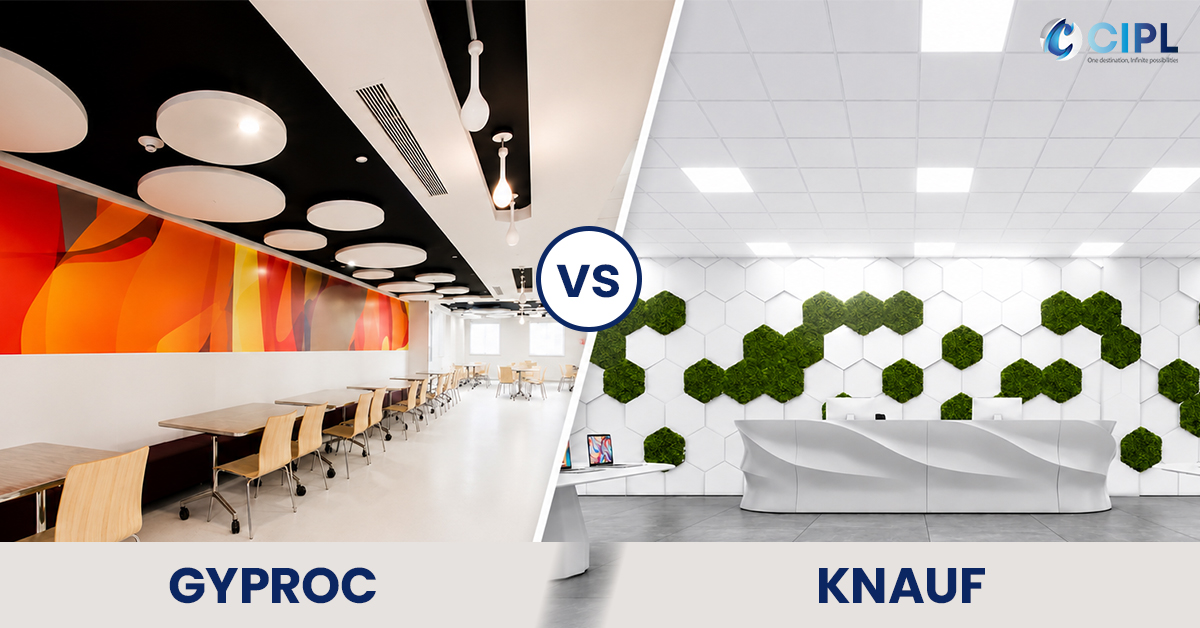
When designing a high-performance commercial interior, the choice of substrate defines the longevity, safety, and acoustic comfort of the entire layout. For architects, interior designers, and project management consultants (PMCs) across India, specifying a gypsum board ceiling setup regularly comes down to a choice between two global giants: Gyproc ceiling solutions (by Saint-Gobain) and Knauf ceiling solutions.
Both brands dominate the market for an Interior building material that requires strict adherence to fire, structural, and acoustic criteria. However, choosing blindly between a Saint-Gobain Gyproc system and a Knauf assembly can lead to unexpected challenges on-site affecting your project timeline, overall installation costs, and long-term performance.
This comprehensive guide breaks down the technical details, practical field insights, and financial considerations of knauf gypsum board vs. Saint-Gobain to help you make the right choice for your next commercial development.
The Core Debate: Why Material Specification Matters
In premium office developments across shifting microclimates from the humid corporate coastal stretches of Mumbai and Chennai to the intense temperature swings of Delhi-NCR, selecting ceiling materials is a critical functional decision.
[Acoustic Performance] + [Fire Resistance] + [Sag Resistance] = Long-Term Asset ROIA substandard choice or mismatched system framework doesn’t just look poor over time; it leads to sagging grids, visible joint cracking under heavy centralized HVAC loads, and poor sound isolation between meeting rooms.
Both Gyproc and Knauf offer advanced engineering that far outperforms generic, locally unbranded boards. They form the structural base of a modern gypsum board interior, providing a reliable foundation for decorative finishes, acoustic paneling, and complex lighting layouts.
Deep Technical Breakdown: Knauf vs Gyproc Ceilings
To choose the right option for a large-scale commercial workspace, it helps to compare these top ceiling material brands in India across key technical categories.
1. Board Composition and Core Strength
- Gyproc Ceiling Boards: Saint-Gobain’s proprietary formulation features a dense, pure crystalline gypsum core wrapped in high-bond liner paper. This design gives the board exceptional flexural strength and clean scoring edges, which significantly reduces on-site material breakage during complex architectural cuts.
- Knauf Ceiling Boards: Known for precision German engineering, Knauf boards use a highly pure, synthetic gypsum core reinforced with specialized organic additives. This gives the board excellent core density and impact resistance, making it a reliable choice for high-traffic corridors and demanding interior walls.
2. Moisture Resistance and Sag Performance
In corporate office environments, high humidity from centralized HVAC systems can cause standard gypsum boards to absorb moisture, leading to unappealing sagging along the joints.
- Gyproc (AquaLine): Uses specialized silicone water-repellent additives within the core, making it highly effective at resisting moisture in humid coastal corporate hubs.
- Knauf (Moisture Resistant MR): Formulated with hydrophobic additives, Knauf’s MR boards offer excellent performance in damp environments, ensuring flat, sag-free surfaces over wide ceiling spans.
3. Fire-Rated System Performance
Passive fire protection is non-negotiable for commercial building compliance and safety clearances.
- Gyproc FireLine: Features fiberglass micro-particles and specialized additives in its core to maintain structural integrity under intense heat. It delivers tested fire ratings ranging from 30 minutes to 4 hours when installed with the complete certified Gyproc framework.
- Knauf Fire Shield: Uses a heavily fiberglass-reinforced core that shrinks at a controlled, minimal rate when exposed to open flame. This keeps the ceiling grid stable and helps secure vital evacuation routes during emergencies.
Acoustic Performance: Achieving Optimal NRC Ratings
Open-plan workspaces require smart sound management to keep employees focused and comfortable. A standard gypsum board interior acts as an effective sound barrier, but managing echo and sound transfer requires looking closely at technical acoustic metrics.
For executive boardrooms, confidential meeting rooms, and private workspaces, standard boards are often upgraded with acoustic perforations:
- Gyproc Gyptone / Rigitone: These boards feature precision square, hexagonal, or round perforations paired with an acoustic tissue backing. They deliver a Noise Reduction Coefficient (NRC) of up to 0.80, absorbing ambient echo and keeping workspaces quiet.
- Knauf Cleaneo: This specialized acoustic board provides excellent sound absorption and features a built-in air purification effect that decomposes indoor volatile organic compounds (VOCs), supporting corporate wellness initiatives.
Supply Chain Dynamics: The Role of Interior Distributors
Even the best material can create bottlenecks if it isn’t available when your project needs it. This makes your choice of supply chain partners crucial.
Saint-Gobain Gyproc has a long-established, mature manufacturing and distribution network across India. For contractors and builders, this means consistent local availability, steady pricing, and reliable logistics, even for fast-tracked projects.
Knauf has steadily expanded its manufacturing footprint in India, making it a highly competitive choice for major infrastructure and corporate projects. When sourcing either brand, working with authorised national interior distributors is essential to ensure:
- 100% Genuine Components: Avoid counterfeit channels by sourcing certified metal sections, jointing compounds, and boards together as a single system.
- Consistent Batch Deliveries: Ensure consistent material thickness and drying times across massive corporate floor plates.
- Project Pricing Support: Secure commercial wholesale rates for large-scale developments.
Installation Insights For Contractors and PMCs
Achieving a flawless, smooth finish requires following strict on-site installation protocols.
Frame Alignment ---> Board Fixing with Staggered Joints ---> Jointing Compound Matrix ---> Sanding & Primer
- System Matching: Never mix a Gyproc board with a Knauf metal channel, or vice versa. Both manufacturer warranties require using their complete, tested system components, including the perimeter channels, intermediate channels, and matching drywall screws.
- Staggered Joint Layout: Ensure that the short edges of the gypsum boards do not line up in a continuous line. Staggering the joints distributes structural stress evenly, preventing fine cracks from appearing later due to minor building movement or vibrations.
- Temperature Control: Avoid applying jointing compounds during extreme temperature drops or high humidity. Let the jointing compound dry completely before applying a high-quality primer and final paint finish.
Financial Considerations: Cost vs Long-Term Value
When evaluating popular false ceiling brands in India, looking only at the initial cost per square foot can be misleading.
Initial Material Cost <---- Balanced Against ----> Maintenance Overhead + Lifetime Wear Performance
While generic, unbranded gypsum boards may lower your upfront material expenses, they often lead to higher lifetime costs due to sag remediation, joint cracking repairs, and poor acoustic insulation.
Investing in a complete, certified system from either Gyproc or Knauf ensures long-term performance, minimizes maintenance overhead, and supports green building certifications (like LEED or WELL), directly increasing the market value of your commercial property.
Secure Expert Support for Your Next Project
Selecting between a Gyproc ceiling and a Knauf ceiling comes down to your project’s unique technical requirements, local material availability, and specific performance goals. Don’t leave your project’s ceiling performance or compliance to guesswork.
Our technical specialists work closely with major commercial interior teams across India to supply premium, fully certified ceiling and wall systems that ensure on-site efficiency and long-term durability.
Frequently Asked Questions
What Is Gypsum Board Used For?
Gypsum board is used for constructing interior walls, ceilings, partitions, and decorative features in residential, commercial, and industrial buildings, providing a smooth finish along with fire resistance, sound insulation, and easy installation.
Is Gypsum Board Soundproof?
Gypsum board is not completely soundproof, but it helps reduce noise by improving sound insulation. When combined with insulation, resilient channels, or multiple layers, it can significantly improve acoustic performance in walls and ceilings.
Recommeded Blogs
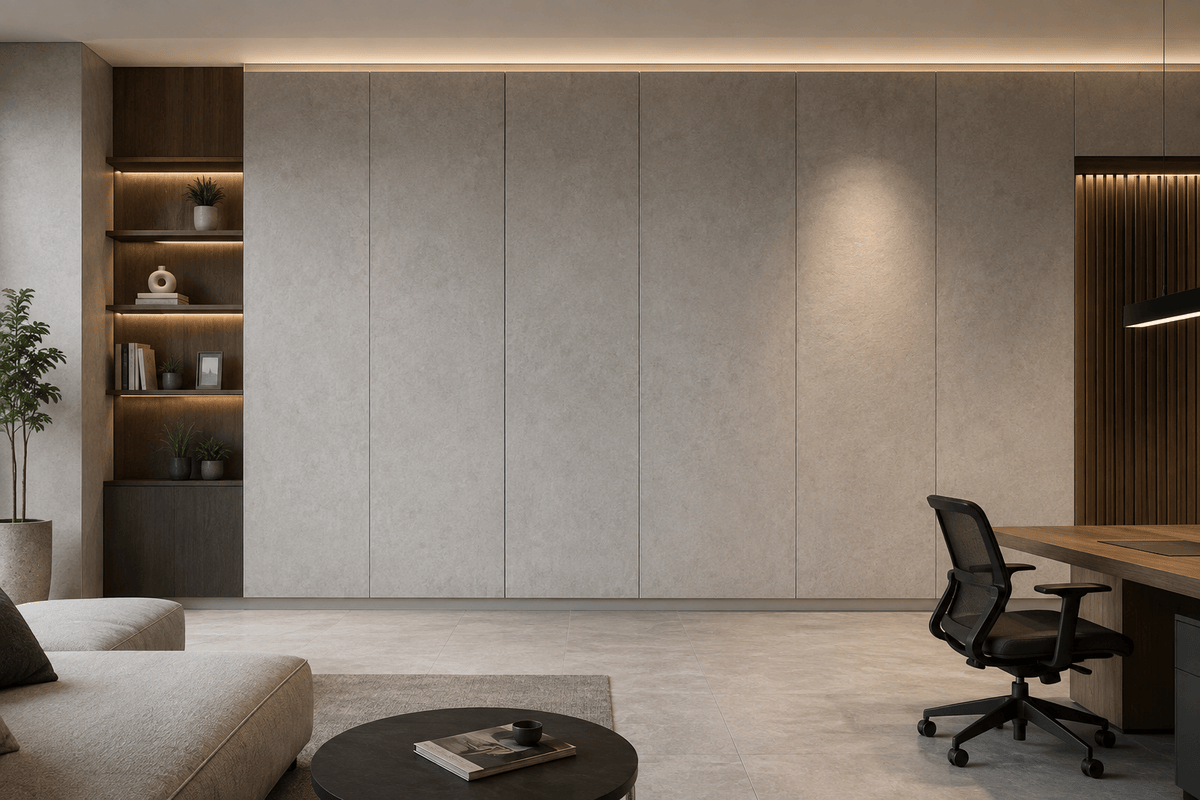
Cement Particle Board: Uses, Benefits, and Applications
If you've ever renovated a home, fitted out an office, or simply searched for a moisture-proof alternative to plywood, chances are you've come across cement particle board without realising how much is actually going on inside that panel. It's one of those materials that quietly shows up everywhere — kitchen cabinets, false ceilings, partition walls,…
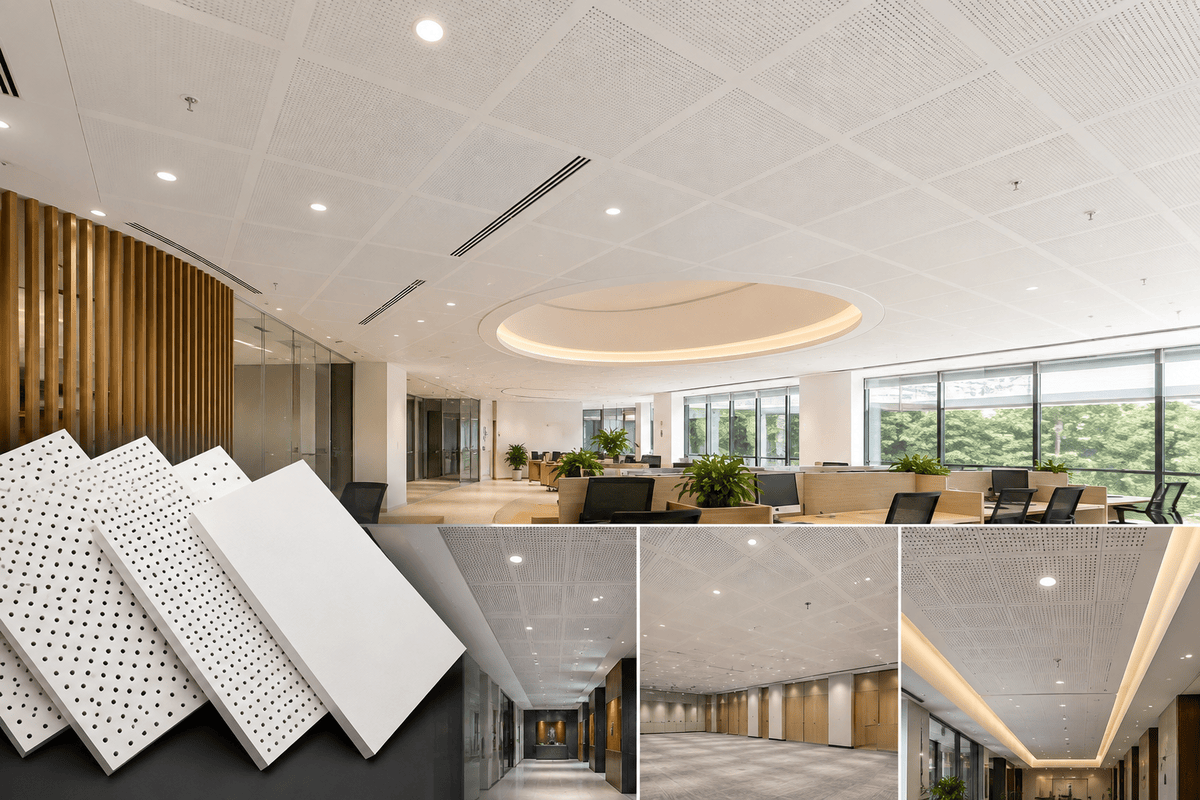
Danoline Gypsum Ceiling Panels: Specifications, Types, & Where They’re Used
If you've specified acoustic ceilings for a hospital, school, or corporate office in India, you've almost certainly come across the Danoline name. Knauf Danoline is one of the most trusted manufacturers of gypsum-based acoustic ceiling and wall panels in the world, and it's a brand CIPL Group supplies directly to architects, contractors, and developers across…
Best Thermal Insulation Materials for Buildings (2026 Guide)
Modern commercial buildings are expected to do far more than provide functional space. They need to deliver thermal comfort, keep energy bills in check, improve indoor acoustics, and meet strict fire safety codes — all at once. That's where thermal insulation materials earn their place in the building design. Whether you're designing an office, hospital,…