
Cement Particle Board: Uses, Benefits, and Applications
If you’ve ever renovated a home, fitted out an office, or simply searched for a moisture-proof alternative to plywood, chances are you’ve come across cement particle board without realising how much is actually going on inside that panel. It’s one of those materials that quietly shows up everywhere — kitchen cabinets, false ceilings, partition walls, exterior cladding — because it solves problems that plywood, MDF, and standard gypsum board simply can’t.
Most guides to this material either stay too technical for a homeowner to use or too generic for an architect to actually specify from. This one is meant to work for both: what cement particle board actually is, how it’s manufactured, what its real technical properties are, where it gets used at home and on commercial projects, how it stacks up against the alternatives, and which product to pick for which job.
What Is Cement Particle Board?
Cement particle board — also known as cement-bonded particle board, CBPB, or simply cement board — is a composite panel made by binding wood particles with cement under high pressure. The result combines two very different materials into one board: the strength, fire resistance, and weather resistance of cement, along with the workability, machinability, and relatively light weight of wood.
How Cement Particle Board Is Manufactured?
The manufacturing process starts with wood particles — typically from fast-growing species like eucalyptus — which are mixed with cement, water, and mineralising chemicals, then compressed under high pressure and cured. The mineralisation step is what makes the finished board resistant to termites and vermin: it chemically alters the wood particles so they’re no longer a viable food source for pests, which is a meaningful advantage over untreated timber-based boards that need periodic chemical treatment to stay protected.
The most established version of this material in India is Bison Panel, manufactured by NCL Industries using technology originally imported from Bison Werke in Germany. Bison Panel is composed of roughly 62% cement and 28% wood, with the remainder made up of water and processing additives. The board contains no asbestos or formaldehyde, and the process dust generated during manufacturing is non-hazardous — a detail that matters increasingly for both health-conscious homeowners and architects working toward green building certifications like IGBC or LEED.
CIPL Group is the largest distributor of Bison Panel cement bonded particle board products in India, supplying the full range — Plain Board, Bison Lam, Designer Board, and Plank Board — to homeowners, architects, and contractors nationwide. You can explore CIPL’s complete range of interior building materials alongside cement particle board, including ceilings, flooring, doors, and wall finishes, all sourced from the same trusted distributor.
Why Does Cement Particle Board Work Where Other Boards Don’t?
Plywood warps in humidity. MDF swells and delaminates near moisture. Standard gypsum board struggles with heavy point loads and outdoor exposure. Cement-bonded particle board was developed specifically to sit in the gap these materials leave behind, and each of its core properties solves a specific, recurring problem in Indian construction and interior work.
Fire Performance
Because the core is cement-based rather than combustible wood fibre alone, cement particle board is inherently fire resistant rather than relying on a surface-applied fire retardant that can wear off over time. This matters whether it’s a kitchen partition at home positioned near a gas stove, or a fire-rated commercial door assembly that needs to hold a documented fire rating for insurance and code compliance.
Weather and Moisture Resistance
Unlike plywood or MDF, cement particle board doesn’t swell, rot, or delaminate when exposed to moisture. This is the single biggest reason it gets specified for bathrooms, kitchens, balconies, and any exterior application — spaces where timber-based boards have a well-known failure pattern that shows up within a few years of installation, especially in India’s humid coastal cities.
Termite and Pest Resistance
The mineralisation process used on the wood particles makes the board resistant to termites and vermin, removing a maintenance headache that plagues timber-based furniture and boards over time. For homeowners who’ve dealt with a termite infestation in wooden furniture before, this single property is often the deciding factor in choosing cement particle board over conventional alternatives.
Sound Insulation
The dense, composite structure gives cement particle board meaningfully better acoustic performance than lighter alternatives, useful in everything from a home theatre wall to an office partition separating a meeting room from an open floor. If acoustic performance is the primary priority for your project, CIPL’s dedicated insulation range is also worth exploring alongside cement particle board as part of a combined acoustic strategy.
Workability
Despite the cement content, the board can still be cut, drilled, and fixed using standard woodworking tools — a circular saw, drill, or hand tools all work fine with the right blades and bits. This means it doesn’t demand specialised labour or push installation timelines out the way some purpose-built fire-rated materials do.
Structural Strength
Cement particle board handles working loads well enough to be used in flooring and decking applications, not just vertical surfaces, which is unusual for a board in this weight class. This structural capacity is what allows it to be specified for mezzanine flooring and raised access flooring in commercial buildings, applications that lighter boards simply can’t support.
Technical Properties of Cement Particle Board
Whether you’re a homeowner comparing materials with your contractor or an architect finalising a bill of quantities, here are the specifications that typically need to be confirmed before ordering:
Composition: Approximately 62% cement, 28% wood particles, with the balance made up of water and additives used in the bonding process.
Fire resistance: Inherently fire-resistant due to the cement content, with documented fire ratings available depending on board thickness and the assembly it’s used in — partition, door, or ceiling system, each of which is tested and rated differently.
Weather resistance: Suitable for both interior and exterior use without the swelling or rot risk associated with timber-based boards, making it viable for facades and balcony applications that plywood and MDF simply can’t handle.
Pest resistance: Mineralised wood particles resist termite and vermin attack, unlike untreated timber products that require ongoing chemical treatment to maintain resistance.
Sound reduction: Documented sound reduction performance when used in partition systems, particularly when combined with steel stud framing rather than timber studs.
Environmental profile: No asbestos, no formaldehyde, and non-hazardous process dust, relevant for both indoor air quality and green building point systems.
Finish flexibility: Boards can be left plain, laminated, or supplied as a designer finish, depending on whether the application is structural and hidden, or an exposed, visible surface that needs to look finished on its own.
Standard thicknesses: Available across a range of thicknesses depending on the application — thinner boards for wall linings and partitions, thicker boards for flooring and structural applications where load-bearing capacity matters more than weight.
Where Is Cement Particle Board Used at Home?
Modular Kitchens
Cement particle board is a popular substrate for kitchen cabinets and countertops because it resists moisture, steam, and heat far better than plywood or MDF. This matters directly above a stove, where heat and steam are a daily occurrence, and below a sink, where a single slow leak can ruin a plywood cabinet base within months.
Bathroom Cabinetry and Vanities
Constant exposure to moisture makes bathrooms one of the toughest environments for furniture-grade boards. Cement particle board holds up where timber-based alternatives eventually swell or rot, which is why it’s become the preferred substrate for bathroom vanities in higher-spec residential projects. If you’re planning a full bathroom renovation, it’s worth pairing your board choice with CIPL’s sanitaryware range for a coordinated, moisture-proof finish across fixtures and furniture.
False Ceilings
Homeowners increasingly use cement particle board for false ceilings in kitchens and utility areas, where humidity and heat make standard gypsum less durable over time. It’s a smaller share of the false ceiling market than gypsum overall, but in exactly the rooms where gypsum tends to underperform, cement particle board is the more sensible choice. CIPL’s broader ceilings and partitions range covers both cement particle board and gypsum-based options, which makes it easy to compare the two directly for a specific room.
Partition Walls
For homes that need an internal partition — dividing a large room, adding a study nook, or separating a home office from a living area — cement particle board partitions offer better sound insulation and durability than drywall alone, at the cost of slightly more weight and a marginally higher installation cost.
Exterior Cladding and Balconies
Because the board handles weather exposure well, it’s increasingly used for balcony cladding, external wall panels, and decorative facade elements on residential buildings, particularly in projects where architects want a textured or modern exterior finish without the ongoing maintenance that timber cladding demands. CIPL’s wall finishes collection includes complementary cladding and finish options for these applications.
Furniture and Shelving
Wardrobes, shoe racks, and shelving units built from cement particle board tend to outlast timber-based equivalents in high-humidity Indian climates, particularly in coastal cities like Mumbai, Chennai, and Kochi where monsoon humidity is a year-round design consideration rather than a seasonal one.
Where Is Cement Particle Board Used in Commercial and Institutional Buildings?
Partitions
This is the biggest commercial use case for the material. Cement particle board is used in both interior and exterior wall partitions, typically fixed onto timber or steel stud framing. Interior partitions generally require a 3–5 mm expansion gap between boards, while exterior applications need a wider 5–10 mm gap to accommodate greater movement from temperature and humidity swings across a full day-night cycle. Its fire rating and sound reduction performance make it a strong choice for office partitions, hospital ward divisions, and hotel guest room walls, where fire code compliance and acoustic privacy are both non-negotiable specification requirements. CIPL’s commercial ceiling solutions page covers partition systems built around this same material.
False Ceilings
Used in both suspended grid ceiling systems and fixed ceiling applications. Because it doesn’t sag or degrade with humidity the way some gypsum products can in poorly ventilated spaces, it’s a common choice for commercial kitchen ceilings, back-of-house areas, and any space where mechanical ventilation can’t fully control humidity year-round.
Flooring
Cement particle board is used in raised flooring for large open areas and as a substrate beneath ceramic tile flooring. Its structural strength under working loads makes it suitable for mezzanine flooring in commercial and industrial buildings — an application where lighter boards simply aren’t viable, since mezzanine floors need to support foot traffic, equipment, and sometimes stored inventory. See CIPL’s commercial flooring solutions for the full range of compatible flooring systems.
Doors
The board is used both as panel inserts within flush doors and in the construction of fire-rated doors, where cement particle board’s inherent fire resistance directly supports the door assembly’s overall fire rating — a requirement that’s non-negotiable in most commercial buildings under Indian fire codes, particularly for stairwell doors, service corridors, and hospital wards. CIPL’s door solutions include fire-rated options built around cement particle board cores.
Wall Cladding and Facades
Because the board handles exterior exposure well, it’s used for wall cladding, building facades, and decorative sidings on commercial buildings. This has become more common in office parks and retail developments looking for a textured, modern facade finish that doesn’t carry the maintenance burden of timber cladding, while still meeting fire safety requirements for exterior building envelopes.
Cabinetry and Fixed Furniture
In commercial kitchens, retail fit-outs, and institutional buildings, cement particle board is used for cupboards, storage units, and other fixed furniture where moisture and heavy daily use would degrade standard particle board or MDF far faster than in a typical residential setting.
Decking and Roof Underlay
Beyond interiors, the board is also specified for decking and as a roof underlay in commercial and industrial construction, taking advantage of its weather resistance and structural performance in applications directly exposed to the elements over the building’s lifespan.
You can browse CIPL’s full cement-bonded particle board range on the ceilings and partitions product page, and explore the complete Bison Panel product line — Plain Board, Bison Lam, Designer Board, and Plank Board — on CIPL’s Bison Panel distributor page.
Cement Particle Board vs Plywood vs MDF vs Gypsum Board
A detailed comparison for anyone weighing options at the buying or specification stage:
| Comparison | Plywood | MDF (Medium-Density Fibreboard) | Gypsum Board | Cement Particle Board |
|---|---|---|---|---|
| Moisture Resistance | Poor in humid or wet conditions; prone to delamination | Poor; swells significantly when exposed to moisture | Moderate; suitable for dry interiors only | Excellent; highly resistant to moisture and humidity |
| Fire Resistance | Low | Low | Good | Excellent; ideal for fire-rated applications |
| Strength & Durability | Good tensile strength but less durable in wet environments | Moderate; best for non-structural applications | Low impact resistance and limited load-bearing capacity | High strength, excellent impact resistance, and superior durability |
| Load-Bearing Capacity | Moderate | Low | Low | High; suitable for structural and heavy-duty applications |
| Workability | Easy to cut and install | Excellent for routing, profiling, and decorative finishes | Easy and quick to install | Requires specialized tools but offers long-term performance |
| Best Applications | Furniture, cabinets, and dry interior spaces | Decorative furniture, cabinetry, and laminate finishes | Interior partitions, ceilings, and lightweight walls | Exterior walls, wet areas, fire-rated partitions, facades, and flooring substrates |
| Installation Speed | Fast | Fast | Very fast | Moderate |
| Cost | Lower upfront cost | Affordable | Most economical | Higher initial cost but lower lifecycle cost |
| Ideal Environment | Dry indoor areas | Dry indoor decorative applications | Dry interior partitions and ceilings | Moisture-prone, high-traffic, fire-rated, and exterior environments |
| Key Limitation | Vulnerable to moisture and fire | Swells with moisture and has poor fire performance | Limited strength and unsuitable for heavy loads or exterior use | Higher upfront investment compared to wood-based boards |
| Overall Recommendation | Suitable for dry interior woodworking projects | Best for decorative furniture in dry spaces | Ideal for lightweight partitions and ceilings | Best choice for projects requiring durability, moisture resistance, fire safety, and structural performance |
How to Choose the Right Cement Particle Board Product?
A quick way to narrow down which Bison Panel product fits your project:
Standard structural use — partitions, ceilings, flooring substrate: Bison Panel Plain Board is the baseline option, and the most cost-effective way to get the material’s core fire, moisture, and pest resistance without paying for a decorative finish you don’t need.
Need a laminated, ready-to-install finish: Bison Lam comes pre-laminated, reducing on-site finishing work — useful for both home furniture and commercial fit-outs where installation speed matters as much as the final look.
Visible, design-forward surfaces — feature walls, reception areas, statement furniture: Bison Designer Board offers the same physical properties as the plain board with a higher-quality decorative finish, so you’re not trading performance for appearance.
Flooring and plank applications: Plank Board is built specifically for these use cases, engineered with the thickness and structural profile flooring applications need rather than being a repurposed wall panel.
If you’re unsure which product suits your project, whether it’s a home renovation or a large commercial fit-out, CIPL’s team can match the specification to the right Bison Panel product based on the application, budget, and expected exposure to moisture or load. You can also browse CIPL’s full product catalogue to see how cement particle board fits alongside flooring, lighting, hardware, and other interior building materials for a complete project.
Frequently Asked Questions
What Is Cement Particle Board Made of?
Cement particle board is a composite panel made from cement and wood particles bonded together under high pressure. The most established version in India, Bison Panel, is composed of approximately 62% cement and 28% wood, with the wood particles chemically mineralised for termite and pest resistance.
Is Cement Particle Board Fire-Resistant?
Yes. Because the core material is cement-based rather than purely wood fibre, cement particle board is inherently fire-resistant, which is why it’s used in kitchens, partitions, and fire-rated commercial doors alike.
Is Cement Particle Board Waterproof?
Cement particle board offers strong weather and moisture resistance compared to plywood, MDF, or standard gypsum board. It doesn’t swell, rot, or delaminate when exposed to humidity or moisture, which is why it’s commonly used in wet areas and exterior applications.
Can Cement Particle Board Be Used Outdoors?
Yes. Its weather resistance makes it suitable for exterior applications including wall cladding, balcony panels, building facades, decking, and roof underlay, in addition to interior use.
Where Can I Buy Cement Particle Board In India?
CIPL Group is one of the largest distributors of Bison Panel cement-bonded particle board products across India, supplying homeowners, architects, and contractors for projects of every scale. You can view the full range on CIPL’s Bison Panel distributor page or get a quote directly.
What’s The Difference Between Cement Particle Board And Standard Particle Board?
Standard particle board is bonded with synthetic resin and wood particles alone, making it vulnerable to moisture and fire. Cement particle board replaces most of that binder with cement, giving it significantly better fire resistance, moisture resistance, and structural strength, at a higher cost than standard particle board.
Does Cement Particle Board Contain Asbestos or Formaldehyde?
No. Bison Panel, the leading cement particle board brand in India, contains no asbestos or formaldehyde, and the manufacturing process dust is non-hazardous.
What Gap Should Be Left Between Cement Particle Boards During Installation?
Interior partition walls typically require a 3–5 mm expansion gap between boards, while exterior walls need a wider 5–10 mm gap to accommodate greater temperature- and humidity-driven movement.
Recommeded Blogs

Best Flooring for Hospitals in India (2026): Types, Costs & NABH Requirements
In a hospital, the floor is not just a finish. It is part of infection control, patient safety and the building's running cost. Every day it takes trolley wheels, wheelchairs, spills, blood, disinfectants and thousands of footsteps. A wrong choice shows up fast: grout lines that hold bacteria, cracked tiles under stretchers, slippery corridors, or…
Which Flooring Is Best For Office Cabins?
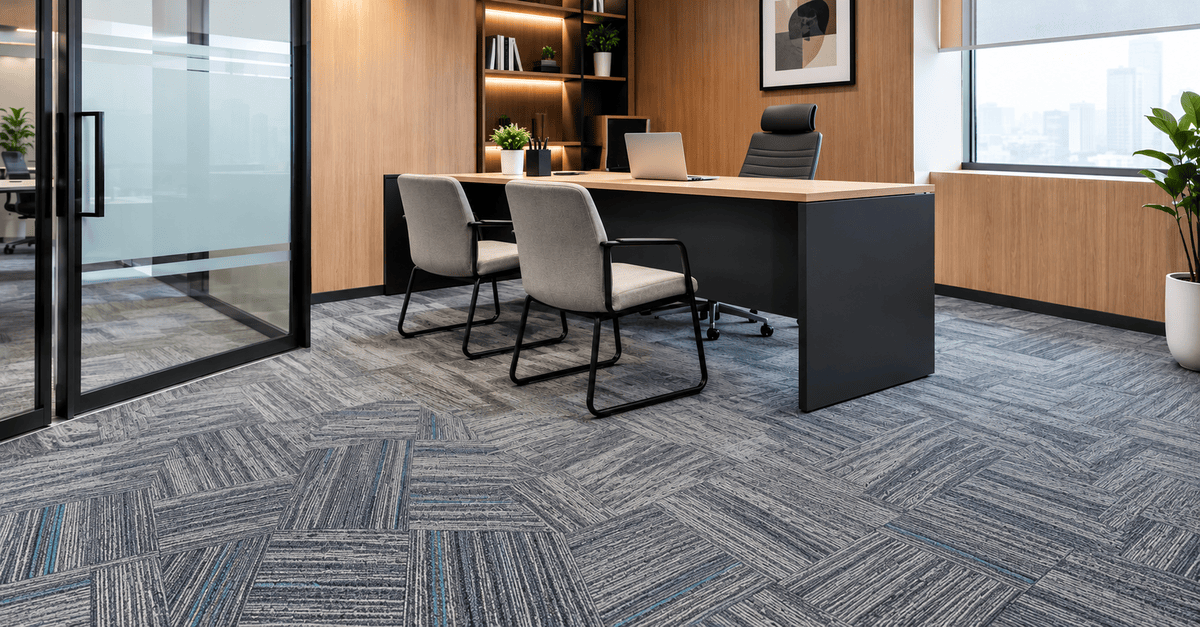
When designing an office cabin, most people focus on furniture, lighting, wall colours, and storage. But have you thought about how much difference the flooring can make? The right flooring can make an office cabin look more professional, feel comfortable, and stay in good condition for years. Whether you're designing a manager's cabin, a director's…
Best Ceiling Solutions In Delhi | CIPL Group
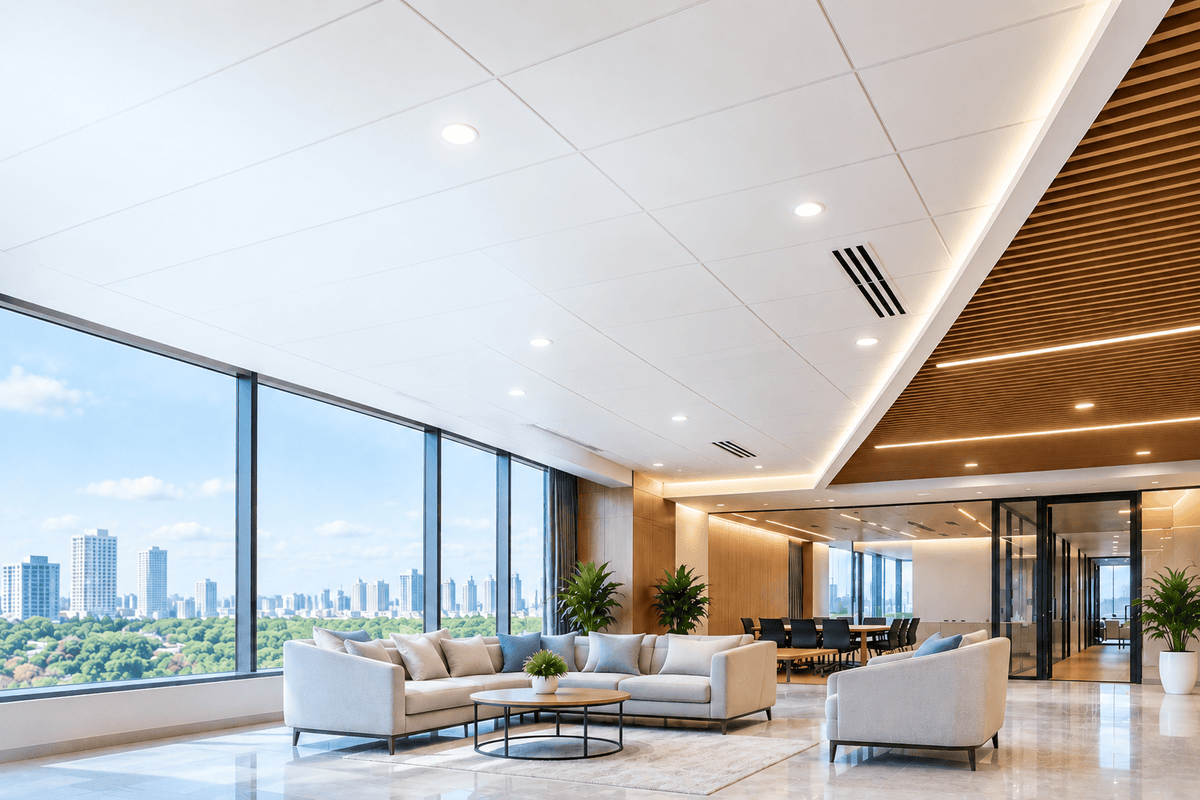
Choosing the best ceiling solutions in Delhi is an important step in creating functional, comfortable, and attractive interiors. Whether you are designing a corporate office, hotel, hospital, school, retail showroom, or residential property, the right ceiling system can improve the appearance of a space while helping manage lighting, acoustics, and building services. Today, architects, interior…