
Best Thermal Insulation Materials for Buildings (2026 Guide)
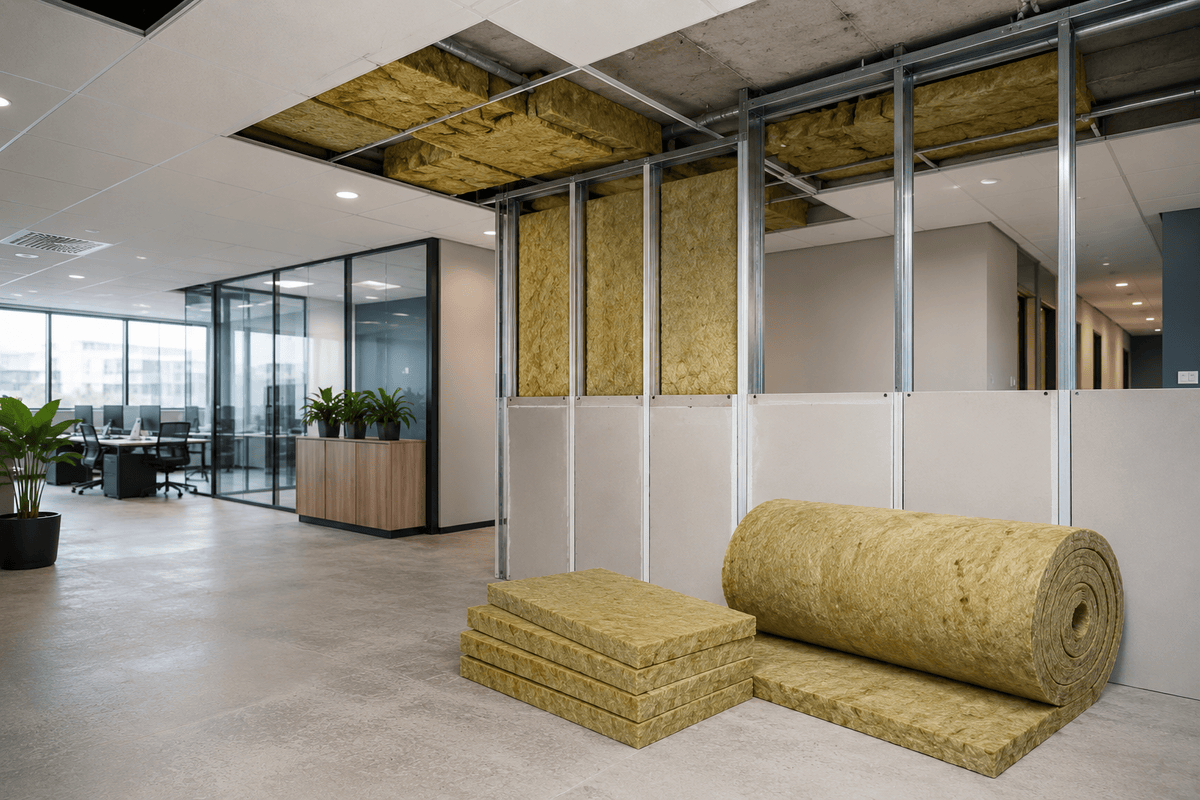
Modern commercial buildings are expected to do far more than provide functional space. They need to deliver thermal comfort, keep energy bills in check, improve indoor acoustics, and meet strict fire safety codes — all at once. That’s where thermal insulation materials earn their place in the building design.
Whether you’re designing an office, hospital, educational institution, hotel, retail space, or industrial facility, the insulation material you choose has a direct impact on performance, running costs, and occupant comfort.
Among the many options available today, rock wool insulation has become the go-to choice for architects and designers, thanks to its thermal efficiency, sound absorption, and fire resistance. One of the most trusted rock wool solutions in the Indian market is Rockinsul, distributed by CIPL Group — a name that also distributes UP Twiga glass wool insulation, a separate but complementary product line for projects needing a lightweight glass wool solution.
This guide answers the questions architects, consultants, and facility managers most often search for: what thermal insulation materials are, why they matter, how rock wool compares with glass wool, and how to specify the right product for a commercial project.
What Are Thermal Insulation Materials?
Thermal insulation materials are engineered products that reduce heat transfer between indoor and outdoor environments. They help maintain comfortable indoor temperatures by limiting heat gain in summer and heat loss in winter.
High-quality insulation also delivers:
- Improved energy efficiency
- Lower HVAC operating costs
- Better acoustic performance
- Enhanced fire protection
- Increased occupant comfort
- More sustainable building performance overall
For commercial buildings, the right thermal insulation material is a long-term investment — not just a construction line item.
Why Is Thermal Insulation Important for Commercial Buildings?
Commercial buildings run long hours and lean heavily on HVAC systems. Without effective building insulation, those systems work harder — and cost more — to maintain comfortable indoor conditions.
1. Does Insulation Really Lower Energy Consumption?
Yes. Proper insulation cuts unwanted heat transfer, so HVAC systems don’t have to work as hard. This means lower electricity bills, reduced cooling loads, longer HVAC lifespan, and more consistent indoor temperatures — savings that add up fast in large commercial facilities.
2. Can Insulation Improve Indoor Comfort?
Temperature swings hurt productivity and comfort. Good thermal insulation keeps temperatures stable, reduces hot and cold spots, and improves the overall occupant experience — critical in offices, hospitals, hotels, and schools.
3. Is Rock Wool Insulation Fire-Resistant?
Yes — this is one of the most searched questions about insulation, and for good reason. Rock wool is made from natural volcanic rock and is non-combustible. It withstands extremely high temperatures without contributing to fire spread, making it well suited to high-rises, hospitals, data centres, and industrial facilities.
4. Does Insulation Help With Soundproofing?
Yes. Noise control is now a core design consideration in commercial architecture. Quality acoustic insulation reduces sound transmission between rooms and floors, creating quieter offices, conference rooms, hotels, schools, and healthcare spaces.
5. How Does Insulation Support Sustainable Building Design?
Lower HVAC demand means fewer resources consumed over a building’s lifecycle — supporting green building certifications and broader sustainability goals.
What Are the Different Types of Thermal Insulation Materials?
Several insulation types are used in commercial construction, each with its own strengths:
- Rock wool insulation
- Glass wool insulation
- Expanded Polystyrene (EPS)
- Extruded Polystyrene (XPS)
- Polyisocyanurate (PIR)
- Polyurethane Foam (PUF)
- Fibreglass insulation
What Is Rock Wool Insulation Made Of?
Rock wool (also called mineral wool or stone wool) is made from natural volcanic rock, melted and spun into fibres. It offers excellent thermal performance, strong acoustic absorption, and outstanding fire resistance.
Advantages of rock wool insulation:
- Excellent thermal performance
- Superior sound absorption
- Non-combustible
- Moisture resistant
- Long service life
- Dimensionally stable
- Sustainable raw material
This combination of properties is why rock wool is now the preferred thermal insulation material for architects, consultants, and engineers working on commercial projects.
Rock Wool vs Glass Wool: Which Insulation Is Better?
This is one of the most common questions architects and specifiers search for, and the honest answer is: it depends on the application.
| Question | Rock Wool | Glass Wool |
|---|---|---|
| Which is more fire-resistant? | Excellent — withstands extreme heat, non-combustible | Good — also non-combustible, but generally rated slightly lower |
| Which has better sound absorption? | Excellent — denser fibre structure | Good — effective, but usually less than rock wool |
| Which is more moisture-resistant? | Excellent — hydrophobic, dries quickly | Good — can absorb more moisture over time |
| Which is lighter and easier to install? | Heavier | Lighter, easier to handle |
| Which is typically more cost-effective? | Slightly higher cost | Generally more budget-friendly |
| Best for | Fire-critical, sound-sensitive commercial spaces | HVAC ducts, ceilings, general wall/roof insulation |
In short: if fire resistance and acoustic performance are the priority, rock wool insulation is usually the better fit. If the project needs a lighter, more budget-friendly option for ducts, walls, or ceilings, glass wool insulation is a strong alternative. CIPL Group distributes both — Rockinsul (rock wool) and UP Twiga (glass wool) — so the material can be matched to the actual project brief rather than a one-size-fits-all choice.
Rockinsul: CIPL Group’s Rock Wool Insulation Solution
When selecting insulation for commercial interiors, performance, durability, and code compliance are non-negotiable. Rockinsul, a rock wool insulation brand distributed by CIPL Group, is built around exactly these requirements.
Rockinsul combines thermal efficiency, acoustic comfort, and fire resistance and is widely specified for offices, hospitals, hotels, educational institutions, industrial facilities, and other commercial spaces where long-term performance matters. You can browse the full range under CIPL Group’s insulation category.
Key features of Rockinsul:
- High thermal insulation performance
- Excellent sound absorption
- Non-combustible material
- Durable and dimensionally stable
- Moisture-resistant properties
- Suitable for walls, roofs, ceilings, and HVAC systems
- Supports energy-efficient building design
Why Do Architects Prefer Rockinsul?
Architects look beyond basic thermal performance — they need materials that support occupant comfort, meet fire codes, and integrate cleanly into modern building systems. Rockinsul delivers:
- Reliable thermal insulation for better indoor comfort
- Effective acoustic control in noise-sensitive spaces
- Fire-resistant performance for safer buildings
- Long-lasting durability with minimal maintenance
- Compatibility across a wide range of commercial applications
That versatility makes it suitable for everything from corporate offices and hotels to healthcare facilities and industrial plants.
What Is UP Twiga Glass Wool Insulation Used For?
If a project calls for a lightweight, non-combustible glass wool solution instead of — or alongside — rock wool, CIPL Group also distributes UP Twiga Glasswool Insulation. It offers strong thermal and acoustic insulation, fire resistance, and moisture resistance, and is commonly used for HVAC duct insulation, wall insulation, roof insulation, and ceiling insulation.
Rockinsul and UP Twiga are two distinct product lines under CIPL Group, so specifying the right one depends on the project’s thermal, acoustic, weight, and installation requirements.
How Do You Choose the Right Thermal Insulation Material?
When specifying insulation, weigh these factors:
- Thermal conductivity
- Fire safety requirements
- Acoustic performance needs
- Moisture resistance
- Building type and use
- Installation location (wall, roof, ceiling, duct)
- Sustainability goals
- Long-term maintenance
- Project budget
- Compliance with local building codes
Where Are Thermal Insulation Materials Used?
- Commercial office buildings
- Hospitals
- Hotels
- Educational institutions
- Shopping malls
- Industrial facilities
- Data centres
- HVAC ductwork
- Roofs
- External and partition walls
- False ceilings
- Mechanical rooms
Which Buildings Benefit Most From Insulation?
Office Buildings — False ceilings, partition walls, HVAC systems, mechanical and server rooms. Result: better employee comfort, lower operating costs, quieter meeting rooms.
Hotels — Quiet guest rooms, stable indoor temperatures, lower HVAC expenses, better guest satisfaction.
Hospitals — Patient rooms, operating theatres, diagnostic centres, service ducts, and mechanical systems, where temperature control, fire safety, and noise reduction are all critical.
Educational Institutions — Lecture halls, libraries, laboratories, auditoriums, and classrooms benefit from quieter, more comfortable learning environments.
Industrial Buildings — Protects machinery, pipelines, equipment, and storage areas from challenging thermal conditions.
Data Centres — Helps maintain stable temperatures, improve HVAC efficiency, and protect critical equipment while cutting energy costs.
What Mistakes Should You Avoid When Selecting Insulation?
Even a high-quality product can underperform if it’s the wrong fit — or poorly installed.
- Choosing based only on cost — cheap insulation can compromise thermal efficiency, fire safety, or durability, raising long-term costs.
- Ignoring fire performance — a serious risk in commercial buildings, and a compliance issue.
- Overlooking acoustic needs — thermal-only solutions can leave occupant comfort behind.
- Poor installation — gaps, compression, or bad fitting can undercut even the best material’s performance.
- Ignoring the building’s actual use — a hospital, warehouse, and hotel all have different insulation needs; specification should reflect that.
Who Supplies Thermal Insulation Materials in India?
The right insulation partner matters as much as the right product. CIPL Group is a trusted interior building materials distributor in India with 20+ years of experience, supplying premium insulation — including Rockinsul rock wool insulation and UP Twiga glass wool insulation — alongside false ceiling systems, flooring, lighting, sanitaryware, doors, and architectural hardware. You can see the complete range in the full product catalogue and browse all brand partners here.
Whether you’re working on a corporate office, healthcare facility, hotel, educational institution, or industrial project, CIPL Group helps architects and designers source insulation materials that support energy efficiency, acoustic comfort, and fire-safe building design — backed by a pan-India supply network and technical support. Past work across these categories is showcased on the projects page, and more buying guides like this one are available on the CIPL Group blog.
Frequently Asked Questions
Is Rock Wool Insulation Fire-Resistant?
Yes. Rock wool is made from natural volcanic rock and is non-combustible. It withstands very high temperatures and helps slow fire spread, making it well suited to commercial buildings where fire safety is a key design factor.
What Is The Difference Between Rock Wool And Glass Wool Insulation?
Rock wool is made from natural volcanic rock and is denser, more fire-resistant, and better at sound absorption. Glass wool is made from recycled glass and sand — it’s lighter, generally more budget-friendly, and easier to install, though it typically absorbs slightly more moisture over time.
Which Is Better, Rock Wool Or Glass Wool?
Neither is universally “better” — it depends on the application. Rock wool is usually preferred where fire resistance and acoustic performance are the priority (hospitals, high-rises, industrial plants). Glass wool is a strong choice for HVAC ducts, ceilings, and general wall or roof insulation where weight and budget matter more.
How Long Does Rock Wool Insulation Last?
Rock wool is dimensionally stable and resistant to moisture and degradation, so it typically maintains its thermal and acoustic performance for the lifetime of the building envelope with minimal maintenance.
Does Rock Wool Insulation Absorb Moisture?
No. Quality rock wool is hydrophobic — it resists moisture absorption and dries quickly if exposed, which helps prevent mould growth and preserves long-term thermal performance.
What Are Thermal Insulation Materials Used For?
They reduce heat transfer between the inside and outside of a building, improving energy efficiency, maintaining comfortable indoor temperatures, cutting HVAC costs, and boosting occupant comfort. In commercial buildings, they also improve acoustic performance and fire safety.
Can Thermal Insulation Materials Reduce Noise?
Yes. Many insulation products offer some acoustic benefit, but rock wool is particularly effective at absorbing sound, cutting noise transfer through walls, ceilings, and partitions — ideal for offices, hospitals, hotels, and schools.
Final Thoughts
Choosing the right thermal insulation material is one of the most consequential decisions in any commercial construction project. Good insulation improves indoor comfort, cuts energy use, supports fire safety, reduces noise, and lowers long-term operating costs.
Rock wool insulation has earned its place as a preferred solution because it checks all of these boxes without compromising on durability or safety. Rockinsul, distributed by CIPL Group, delivers that balance of thermal efficiency, acoustic comfort, and fire resistance across offices, hospitals, hotels, schools, and industrial facilities — with UP Twiga glass wool available from the same distributor for projects that call for a different insulation profile.
By partnering with an established distributor like CIPL Group, architects, consultants, contractors, and developers get access to the right material for the job, backed by technical support and reliable supply — helping deliver buildings that perform efficiently today and hold their value for years to come.
Recommeded Blogs

Best Flooring for Hospitals in India (2026): Types, Costs & NABH Requirements
In a hospital, the floor is not just a finish. It is part of infection control, patient safety and the building's running cost. Every day it takes trolley wheels, wheelchairs, spills, blood, disinfectants and thousands of footsteps. A wrong choice shows up fast: grout lines that hold bacteria, cracked tiles under stretchers, slippery corridors, or…
Which Flooring Is Best For Office Cabins?
When designing an office cabin, most people focus on furniture, lighting, wall colours, and storage. But have you thought about how much difference the flooring can make? The right flooring can make an office cabin look more professional, feel comfortable, and stay in good condition for years. Whether you're designing a manager's cabin, a director's…

Best Ceiling Solutions In Delhi | CIPL Group
Choosing the best ceiling solutions in Delhi is an important step in creating functional, comfortable, and attractive interiors. Whether you are designing a corporate office, hotel, hospital, school, retail showroom, or residential property, the right ceiling system can improve the appearance of a space while helping manage lighting, acoustics, and building services. Today, architects, interior…