
Armoured vs Unarmoured Cable: Which One Do You Actually Need?
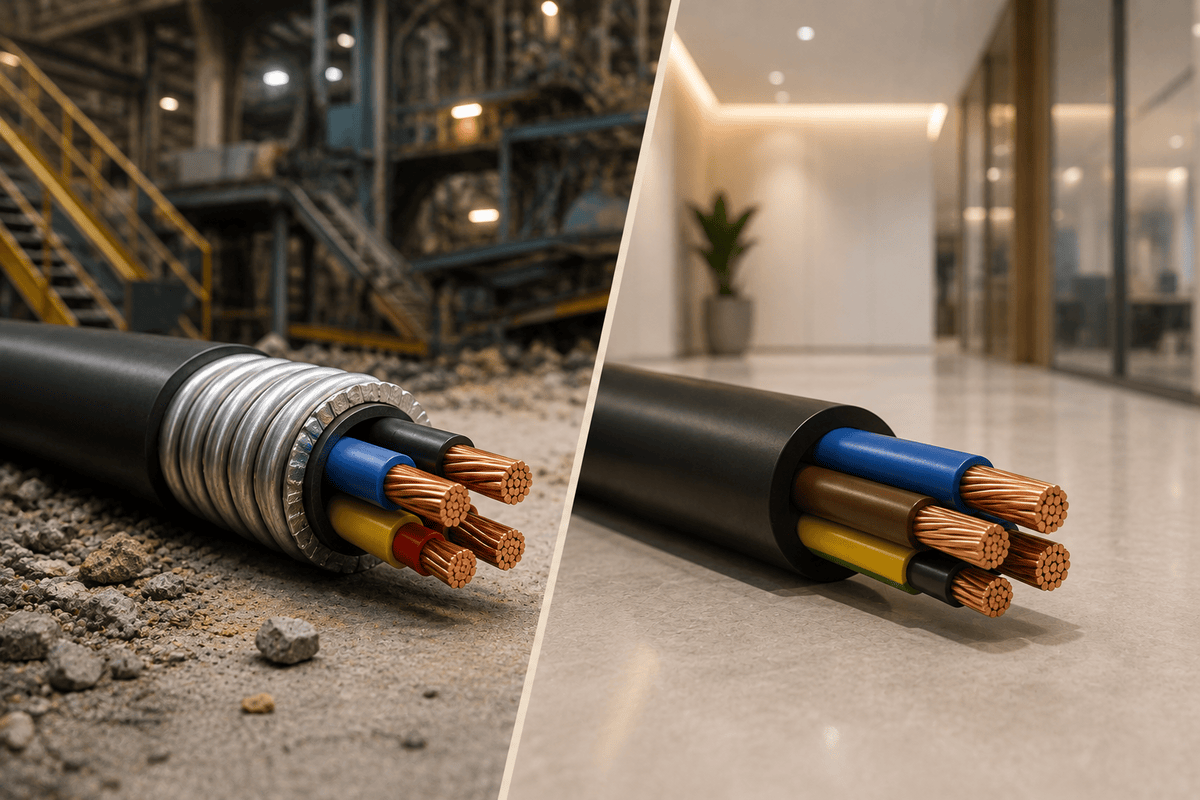
If you’ve gotten two electrical quotes for the same job and noticed one specifies armoured cable while the other doesn’t, you’ve probably wondered whether that’s a genuine technical requirement or just a way to pad the bill. It’s a reasonable thing to question — armoured and unarmoured cable often carry the exact same voltage rating and conductor quality. The difference isn’t about how much power the cable can handle. It’s about what’s protecting it physically, and once you understand that, the choice usually becomes obvious.
This guide covers what armoured cable actually is, the different types you’ll come across, when you genuinely need it, when you’re better off without it, and the practical questions — cost, sizing, earthing, installation — that tend to come up once you’ve made the decision.
What’s the Actual Difference Between Armoured & Unarmoured Cable?
Armoured cable has an extra layer built in — usually galvanised steel wire or steel tape — wrapped around the insulated conductors, sitting just under the outer sheath. That layer doesn’t help the cable carry electricity. Its only job is mechanical: protecting the wire inside from impact, crushing, rodents, and general wear, especially in conditions where the cable isn’t otherwise shielded by a wall, conduit, or building structure.
Unarmoured cable skips that layer. Same conductor, same insulation, but nothing extra guarding it physically. That makes it lighter, easier to bend around tight corners, and cheaper — which is fine, as long as it’s being installed somewhere that doesn’t need the extra protection.
You’ll often see armoured cable listed as Armoured LT (Low Tension) Cable in supplier catalogues, since it’s most commonly used for low-voltage power distribution in tougher conditions.
What’s Actually Inside an Armoured Cable?
It helps to know the layers, working from the inside out, since this is what people are really asking when they search “what is armoured cable made of”:
- Conductor — usually copper, sometimes aluminium for larger installations, carrying the actual current
- Insulation — PVC or XLPE, wrapped around each conductor to keep them electrically isolated
- Inner sheath (bedding) — a layer that holds the insulated conductors together and provides a smooth base for the armour
- Armour — the steel or aluminium layer that gives the cable its mechanical protection
- Outer sheath — the final protective PVC layer that seals everything in and protects the armour itself from corrosion
Each layer does a different job, and it’s the armour specifically — not the insulation — that determines whether the cable can survive being buried, driven over, or exposed outdoors.
What Are the Different Types of Armoured Cable?
Not all armoured cable is built the same way, and the type matters depending on where it’s going:
SWA (Steel Wire Armour) is the most common type by far. Steel wires are wound tightly around the cable core, giving it strong resistance to crushing and pulling forces. This is the standard choice for underground runs and general outdoor power distribution.
STA (Steel Tape Armour) uses a flat steel tape instead of round wires, wrapped in a helix around the cable. It’s typically used where the cable needs to resist crushing forces more than tensile (pulling) stress — often in cable trenches and ducting rather than direct burial.
AWA (Aluminium Wire Armour) swaps steel for aluminium wire, which is lighter and more resistant to corrosion. This makes it a better fit for coastal areas, marine environments, or chemically aggressive industrial settings where steel would corrode faster.
If you’re not sure which type your project needs, this is exactly the kind of thing worth confirming with your supplier before ordering, since the wrong armour type for the environment shortens the cable’s working life significantly.
When Do You Actually Need Armoured Cable?
This is where people tend to overthink it, or underthink it in the opposite direction — assuming armoured is just the “better, safer” choice everywhere. It isn’t. It’s about physical exposure, not electrical performance.
You genuinely need it if you’re running cable underground without a protective conduit — direct burial is the single most common reason armoured cable gets specified, since buried cable is exposed to soil pressure, accidental digging damage, and moisture that unarmoured cable simply isn’t built to handle. This is also the answer to a question that comes up constantly: yes, armoured cable can be buried directly in the ground, and it’s specifically designed for that use, whereas unarmoured cable should never be direct-buried without conduit protection.
It also makes sense in industrial or outdoor settings where the cable might get knocked, driven over, or exposed to weather — factories, plants, and construction sites all fall into this category. Utility and infrastructure projects, like substations and large power networks, tend to specify armoured cable as a default too, partly for the protection and partly because these installations are expensive and disruptive to repair once they’re buried or built into infrastructure.
Public and high-occupancy buildings — hospitals, malls, schools, government offices — often specify armoured cable for main power feeds and fire protection circuits as well, since these buildings need power reliability that ordinary cable exposed to wear and tear can’t guarantee over time.
One less obvious reason: rodents. Basements, farm buildings, and older structures with a known rodent problem benefit from the steel layer, which is a real deterrent against gnawing damage that unarmoured cable has no defence against at all.
And in coastal or marine settings — ports, shipyards, offshore installations — armoured cable (typically AWA, for corrosion resistance) is close to mandatory, since saltwater and humidity degrade unprotected cable far faster.
Is Unarmoured Cable Actually Fine for Most Indoor Wiring?
Yes, in most cases. If the cable is running through conduit, trunking, or inside a finished wall or ceiling, it’s already protected by the building itself — the armour would just be redundant weight and cost. Machinery or equipment wiring that needs to flex regularly is usually better off with a flexible multicore cable instead, since armour actually works against flexibility. And for standard home or office interior wiring, there’s no real physical hazard armoured cable is protecting against in the first place.
Can Armoured Cable Be Used as Earthing or Circuit Protection?
This one comes up a lot with electricians and contractors specifically. In many installations, the steel armour layer itself can serve as the circuit protective conductor (CPC) — essentially acting as part of the earthing system — provided it’s correctly bonded at both ends using the right cable glands. That said, this depends on local electrical code requirements and the specific installation, so it’s not something to assume without checking; some installations still require a separate earth conductor run alongside the armoured cable regardless. This is a detail worth confirming with a qualified electrician rather than guessing, since getting it wrong affects the safety of the entire circuit.
What Size Armoured Cable Do You Need?
Cable size is determined by the conductor’s cross-sectional area (measured in sq mm), and it’s driven by how much current the circuit needs to carry — not by whether the cable is armoured or not. Armouring adds protection, not capacity. That said, a few things specifically affect sizing decisions for armoured cable runs:
- Length of the run — longer cable runs experience more voltage drop, which can mean sizing up even if the connected load doesn’t strictly require it
- Installation method — buried cable, cable in trays, and cable in free air all have different current-carrying capacities for the same size, due to how heat dissipates
- Ambient temperature — hotter environments reduce a cable’s safe current-carrying capacity, which matters for outdoor and industrial installations especially
Because so many variables affect the right size for a specific run, it’s genuinely worth having a supplier or electrician confirm sizing against your actual load and installation conditions rather than assuming a “standard” size will work — this is one of the more common mistakes on real job sites.
How Much More Does Armoured Cable Cost?
Armoured cable generally costs more per metre than unarmoured cable of the same electrical rating — the steel armour layer adds both material and manufacturing cost. It’s heavier too, which can mean slower, more labour-intensive installation, particularly around tight bends, and it typically requires specific armoured cable glands at termination points rather than standard fittings.
That’s exactly why “always go armoured to be safe” isn’t good advice. Paying for armour where it isn’t needed is wasted budget. Skipping it where it is needed is a real long-term risk — and a much more expensive one to fix later, once the cable’s already buried or built in.
Which Brands Should You Actually Buy From?
Once you know whether you need armoured or unarmoured cable, the next decision is whose cable to actually put in the ground or the wall — and this matters more than people expect, since cable quality varies a lot between manufacturers even at similar price points.
Polycab is one of India’s largest cable manufacturers, and its Armoured LT range is a common choice for projects that need dependable, code-compliant power distribution without overthinking the spec — solid copper conductors, consistent insulation quality, and armour built to handle underground and industrial conditions without drama.
KEI has built a strong reputation specifically in industrial and infrastructure cabling, and its Armoured LT Cables tend to be the pick for projects involving utility networks, manufacturing plants, and substations, where the cable is expected to perform reliably for decades with minimal maintenance access.
Havells is probably the most recognised name of the three among architects and facility managers, and its armoured cable range is a frequent choice for commercial buildings, infrastructure projects, and outdoor installations where brand consistency across a project’s electrical specification matters to the client or consultant signing off on it.
All three are legitimate, code-compliant options — the right one usually comes down to project type, existing brand standardisation on site, and what your supplier has readily in stock, more than any meaningful quality gap between them.
Why Choose CIPL for Your Electrical Cable Requirements?
Picking the right cable type and brand is only half the job — the other half is actually getting it to site on time, in the right quantity, without chasing three different suppliers for three different brands. That’s really the problem CIPL exists to solve. Instead of separately sourcing Polycab for one part of the job, KEI for another, and Havells because that’s what the client specified, you’re working with one supplier who already stocks all three and can tell you honestly which one fits your situation, rather than just pushing whatever they happen to have on hand.
If you’re specifying cable for an underground run, an industrial installation, or general building wiring, CIPL’s wires and cables range covers Armoured LT Cables, flexible multicore cables, and FR/FRLS wiring across all three brands, along with the technical support to help you land on the right type and size before you order — not after something’s already gone into the ground.
A Quick Way to Decide
If you’re still not sure which one applies to your situation, ask yourself:
- Is it going underground with no conduit? → Armoured.
- Is it indoors, in conduit, or somewhere already protected? → Unarmoured is usually enough.
- Will it face physical impact, heavy equipment, or outdoor exposure? → Armoured.
- Does it need to flex or move regularly? → Unarmoured, ideally a flexible multicore option.
- Is this a utility, substation, or industrial infrastructure job? → Armoured is typically the expected standard.
- Is it in a coastal or corrosive environment? → Armoured, specifically AWA for corrosion resistance.
If it’s still unclear after that, it’s worth getting a second opinion from your supplier before placing the order. Re-doing an underground run because the wrong cable went in the ground costs a lot more than the price difference between the two types upfront.
Frequently Asked Questions
What Is the Main Difference Between Armoured and Unarmoured Cable?
Armoured cable has an added layer of steel wire or tape around the conductors for physical protection. Unarmoured cable has the same conductor and insulation but without that layer, making it lighter and less expensive but also less protected.
Can Armoured Cable Be Buried Directly in the Ground?
Yes. Armoured cable is specifically designed for direct burial, since the steel armour layer protects it from soil pressure, moisture, and accidental digging damage. Unarmoured cable should not be buried without conduit protection.
Do I Need Armoured Cable for Underground Wiring?
Yes, generally. Any cable buried directly in the ground without conduit protection should be armoured — unarmoured cable isn’t built to withstand the physical conditions underground.
Can Armoured Cable Be Used Indoors?
It can, but it’s usually unnecessary. Indoor wiring is typically already protected by walls or conduit, so armouring adds cost and reduces flexibility without a real safety benefit.
Which Brand of Armoured Cable Is Best – Polycab, KEI, or Havells?
All three are established, code-compliant manufacturers, and the “best” choice usually depends on project type and site standardisation rather than a real quality gap. Polycab is a dependable general-purpose choice, KEI is common on industrial and infrastructure projects, and Havells is frequently specified on commercial builds where brand recognition matters to the client.
Is Armoured Cable More Expensive Than Unarmoured Cable?
Yes, typically. The steel armour layer adds material and manufacturing cost, and the cable is heavier to install. That extra cost is worth it underground or outdoors, but not for standard indoor runs.
What Is Armoured LT Cable?
“LT” stands for Low Tension, referring to the cable’s voltage class, not whether it’s armoured. An Armoured LT cable is simply a low-voltage power cable that also has the added steel armour layer for physical protection.
What Is the Difference Between SWA and AWA Cable?
SWA (Steel Wire Armour) is the standard type, offering strong mechanical protection for general underground and outdoor use. AWA (Aluminium Wire Armour) is lighter and more corrosion-resistant, making it a better fit for coastal or chemically aggressive environments.
Can the Armour Layer Be Used for Earthing?
In some installations, yes — the armour can serve as the circuit protective conductor when properly bonded with the correct cable glands, though this depends on local code requirements. It’s worth confirming with a qualified electrician rather than assuming.
Does Armoured Cable Protect Against Rodent Damage?
Yes. The steel layer is a genuine deterrent against gnawing, which is why armoured cable is often used in basements and agricultural buildings even when the cable isn’t buried.
Recommeded Blogs

Best Flooring for Hospitals in India (2026): Types, Costs & NABH Requirements
In a hospital, the floor is not just a finish. It is part of infection control, patient safety and the building's running cost. Every day it takes trolley wheels, wheelchairs, spills, blood, disinfectants and thousands of footsteps. A wrong choice shows up fast: grout lines that hold bacteria, cracked tiles under stretchers, slippery corridors, or…
Which Flooring Is Best For Office Cabins?
When designing an office cabin, most people focus on furniture, lighting, wall colours, and storage. But have you thought about how much difference the flooring can make? The right flooring can make an office cabin look more professional, feel comfortable, and stay in good condition for years. Whether you're designing a manager's cabin, a director's…

Best Ceiling Solutions In Delhi | CIPL Group
Choosing the best ceiling solutions in Delhi is an important step in creating functional, comfortable, and attractive interiors. Whether you are designing a corporate office, hotel, hospital, school, retail showroom, or residential property, the right ceiling system can improve the appearance of a space while helping manage lighting, acoustics, and building services. Today, architects, interior…