
Best Flooring For Offices In 2026 | Complete Guide
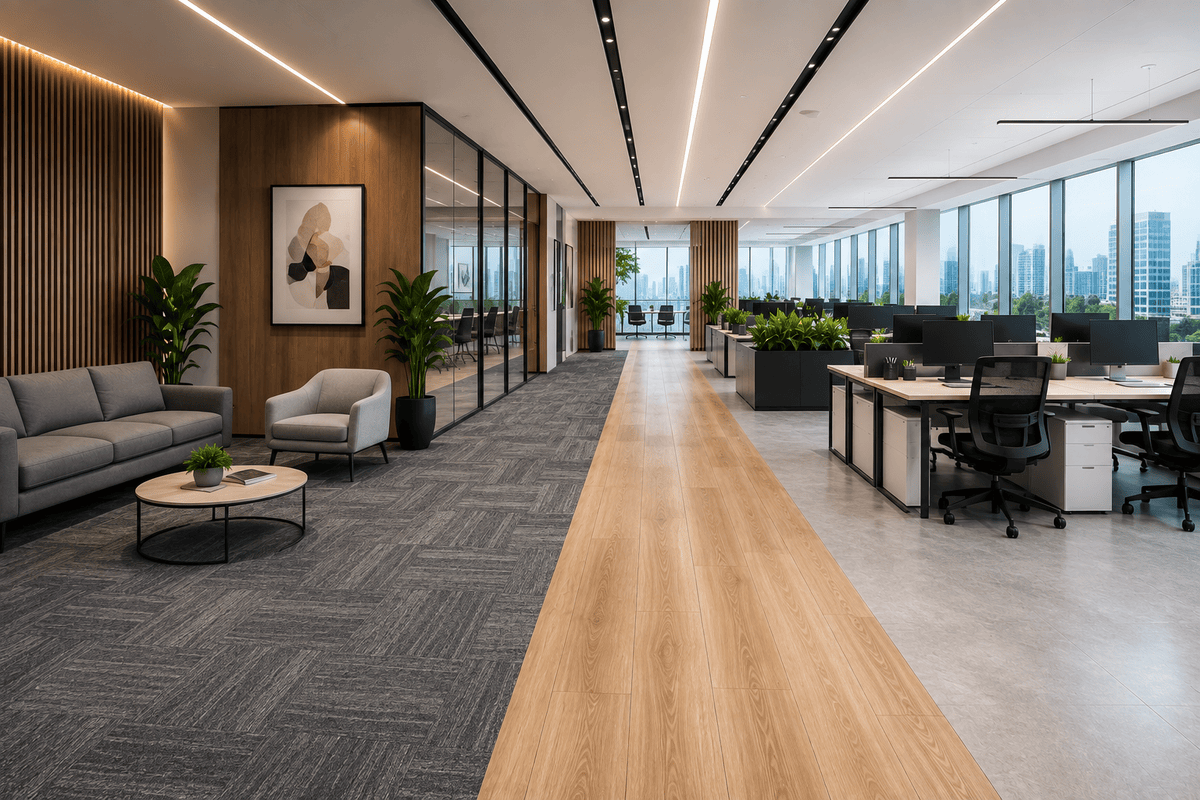
If you’re renovating a workspace or planning a new corporate fit-out, flooring is probably one of the last things on your mood board and one of the first things every employee and visitor actually touches. It absorbs footfall, noise, spills, and wheeled chairs every single day, which is exactly why getting it wrong is so expensive to fix later.
At CIPL Group, we supply commercial flooring solutions including SPC flooring, vinyl flooring, carpet tiles, engineered wood flooring, and modular flooring to architects, contractors, and facility teams across India, so this question comes up constantly: what is genuinely the best flooring for offices in 2026? The honest answer is that it depends on the zone, the budget, and the traffic the floor needs to survive. This guide walks through the options, the real trade-offs, and how to match a flooring type to your specific office.
If flooring is one piece of a larger office fit-out, it’s also worth thinking about how it works alongside your acoustic ceiling solutions, office furniture, and even your commercial doors; flooring rarely performs in isolation. For a shorter, listicle-style comparison of specific products, our earlier post on commercial office flooring solutions is a useful companion read alongside this guide.
What Factors Determine The Best Office Flooring In 2026?
Before comparing materials, it helps to rank what actually matters for an office floor, because “best” changes depending on which factor you weigh most heavily.
- Footfall and traffic: A reception lobby sees very different wear than a private cabin.
- Acoustic performance: Open-plan offices need flooring that absorbs sound, not floors that bounce it around.
- Maintenance: Facility teams want floors that clean easily and don’t need specialist upkeep.
- Installation downtime: Businesses can rarely shut down for weeks, so quick-install systems matter.
- Budget and lifecycle cost: The cheapest floor upfront isn’t always the cheapest floor over 8-10 years.
- Aesthetics and brand image: Flooring is part of how a workspace signals professionalism to clients and talent.
- Sustainability: More Indian corporates are now specifying low-VOC, recycled-content, or LEED-compliant materials.
Once you’ve weighed these against your project, the flooring type usually becomes obvious.
What Are The Types of Office Flooring Available In India?
SPC Flooring
Stone Plastic Composite (SPC) flooring has become one of the fastest-growing choices for Indian offices in the last few years, and 2026 is shaping up to be its strongest year yet. It’s rigid, waterproof, dimensionally stable in India’s humidity swings, and available in wood-look and stone-look finishes that are hard to distinguish from the real thing. SPC flooring with an acoustic underlay also cuts down footstep noise significantly, which makes it a strong pick for open workspaces and meeting rooms alike.
Vinyl Flooring (LVT)
Luxury Vinyl Tile (LVT) and sheet vinyl remain a dependable choice for high-footfall commercial spaces. Vinyl flooring is resilient, comfortable underfoot, quick to install, and considerably cheaper than natural stone or engineered wood while still offering a premium look. It’s particularly well suited to corridors, cafeterias, and reception areas that see continuous movement through the day.
Carpet Tiles
Carpet tiles solve a problem that traditional roll carpet never could: modularity. If one tile gets stained by a coffee spill, you replace that single tile instead of an entire section of flooring. They’re also excellent for acoustic comfort in open-plan offices, reducing noise transmission between workstations. Most corporate offices, IT parks, and BPO floors in India now specify carpet tiles for their combination of comfort, sound absorption, and easy maintenance.
Engineered Wood Flooring
For executive cabins, boardrooms, and reception areas where a warmer, high-end aesthetic matters, engineered wood flooring is still the benchmark. It offers the visual appeal of solid wood with better dimensional stability, making it more suitable for India’s climate than solid hardwood. It sits at a higher price point, so it’s typically used selectively rather than across an entire floor plate.
Vitrified Tiles and Polished Concrete
Large-format vitrified tiles and polished concrete are common in open-plan zones, back-of-house areas, and warehouses attached to office campuses. They’re extremely durable and low-maintenance, though they lack the acoustic softness of carpet tiles or SPC flooring, so they work best combined with ceiling-level acoustic treatment.
Raised Access Flooring
For tech-heavy offices, trading floors, and data-adjacent workspaces, raised access flooring is increasingly the default. It creates a service void beneath the floor for cabling, HVAC, and power, which makes future reconfiguration far easier and is a major reason large corporate campuses in Gurgaon, Bengaluru, and Hyderabad continue to specify it. It also pairs well with underfloor air distribution systems, which several new-build IT parks are now using to improve energy efficiency.
Anti-Static and Epoxy Flooring
Not every office is purely desks and cabins. Campuses with server rooms, labs, or light-assembly areas attached to their corporate space often need anti-static (ESD) flooring or epoxy coatings, which protect sensitive electronics from static discharge and offer a seamless, easy-to-sanitise surface. These are typically specified alongside one of the primary flooring types above rather than used across an entire office.
Comparison: Which Office Flooring Type Wins on What?
| Flooring Type | Durability | Acoustic Comfort | Maintenance | Best Suited For |
|---|---|---|---|---|
| SPC Flooring | Very High | High (with underlay) | Low effort | Open workspaces, meeting rooms |
| Vinyl (LVT) | High | Moderate | Low effort | Corridors, cafeterias, reception |
| Carpet Tiles | Moderate-High | Very High | Moderate | Open-plan desks, conference rooms |
| Engineered Wood | Moderate | Moderate | Moderate | Cabins, boardrooms, reception |
| Vitrified Tiles | Very High | Low | Very Low | Lobbies, back-of-house, high traffic |
| Raised Access Flooring | High | Moderate | Low (easy access) | Tech offices, trading floors |
No single material tops every column, which is exactly why most well-planned offices use two or three flooring types across different zones rather than one material throughout.
Which Flooring Is Best For Different Office Zones?
- Reception and lobby: Vitrified tiles or engineered wood create the strongest first impression and can absorb heavy footfall.
- Open-plan workstations: SPC flooring or carpet tiles balance acoustic comfort with day-to-day durability.
- Private cabins and boardrooms: Engineered wood flooring adds warmth and signals seniority without overdoing it.
- Cafeteria and pantry: Vinyl flooring or vitrified tiles handle spills and cleaning far better than carpet.
- Server rooms and tech floors: Raised access flooring is close to non-negotiable for cable management.
- Corridors and high-traffic zones: Vinyl flooring or vitrified tiles hold up best under continuous movement.
What Does Office Flooring Cost In India?
Pricing varies a fair amount depending on the brand, thickness, sub-floor preparation, and finish quality, so it’s worth getting a project-specific quote rather than relying on a flat number. As a general guide:
- Vitrified tiles and polished concrete tend to sit at the more budget-friendly end.
- Vinyl flooring and carpet tiles fall in a mid-range bracket, with pricing shifting based on wear-layer thickness and pile quality.
- SPC flooring is positioned slightly above vinyl due to its rigid core and added durability.
- Engineered wood flooring and raised access flooring are typically the higher end of the spectrum, reflecting the materials and installation complexity involved.
A useful rule of thumb: factor in lifecycle cost, not just the installation quote. A slightly pricier SPC or carpet tile system that lasts twice as long and needs less upkeep often works out cheaper over a decade than a low-cost option replaced every few years.
What Are The Office Flooring Trends For 2026?
- Wood-look and stone-look SPC is replacing a lot of mid-range engineered wood specification, thanks to near-identical visuals at a lower cost.
- Acoustic-backed flooring is becoming close to standard in open-plan offices as companies prioritise focus-friendly workspaces.
- Sustainable and low-VOC materials are increasingly requested for LEED and IGBC-certified commercial projects.
- Zone-based flooring strategy, mixing two or three materials by function rather than flooring an entire floor plate identically, is now common practice among architects and interior designers.
- Modular, quick-install systems like carpet tiles and click-lock SPC are preferred for offices that can’t afford long shutdown periods during renovation.
How To Choose The Right Office Flooring Supplier?
Once you’ve narrowed down the material, the supplier matters almost as much as the product itself. Look for a distributor that can offer:
- A wide enough catalogue to mix flooring types across zones from a single source.
- Technical support on sub-floor preparation and installation, not just product delivery.
- Reliable, pan-India logistics so multi-branch or multi-city projects stay on schedule.
- Established brand partnerships that guarantee product authenticity and warranty support.
CIPL Group has supplied interior building materials flooring included to architects, contractors, and developers across India for close to two decades, working across corporate offices, IT parks, and commercial campuses of every scale.
How Does Sustainability Factor Into Office Flooring Decisions?
Sustainability has moved from a nice-to-have to a genuine specification requirement, especially for corporates pursuing LEED, IGBC, or WELL certification for their office campuses. A few things procurement teams and architects are increasingly asking about:
- Low-VOC materials: Flooring adhesives and finishes that don’t off-gas indoor pollutants, which matters directly for indoor air quality and occupant wellbeing.
- Recycled content: Many SPC and carpet tile manufacturers now offer ranges with a percentage of recycled backing material without compromising on performance.
- End-of-life recyclability: Modular systems like carpet tiles and click-lock SPC are easier to replace in sections and, in many cases, easier to recycle than fully bonded flooring systems.
- Reduced replacement cycles: A flooring system that lasts 10-15 years instead of 5-7 has a smaller lifecycle environmental footprint than one that needs frequent replacement, even before factoring in material composition.
If your project is targeting a green building certification, it’s worth flagging this early with your flooring supplier rather than retrofitting the requirement later, since documentation and material data sheets often need to be submitted as part of the certification process.
Common Mistakes To Avoid When Specifying Office Flooring
Even experienced project teams run into the same handful of issues when selecting office flooring:
- Treating flooring as a single decision instead of a zone-by-zone one. One material rarely serves reception, open-plan desks, and server rooms equally well.
- Underestimating sub-floor preparation. A poorly levelled or improperly cured sub-floor undermines even the best flooring material and often shows up as visible defects within a year.
- Ignoring acoustic performance until after move-in. Retrofitting acoustic underlay beneath an already-installed floor is far more disruptive than specifying it upfront.
- Choosing purely on upfront cost. As covered above, the cheapest material per square foot isn’t always the cheapest option once maintenance and replacement cycles are factored in.
- Overlooking warranty and after-sales support. Flooring failures a few years in are far easier to resolve when the original supplier stands behind the product.
Working with an experienced distributor who can flag these issues before installation, rather than after, tends to save both budget and rework time.
Frequently Asked Questions
Which Flooring Is Best For A Small Office In India?
For smaller offices, SPC flooring or vinyl flooring usually offers the best balance of cost, durability, and quick installation without needing multiple materials across zones.
Is Carpet Tile Or Vinyl Flooring Better For Offices?
Carpet tiles offer better acoustic comfort and are ideal for open-plan desking, while vinyl flooring handles spills, heavy foot traffic, and cleaning better. Many offices use both, depending on the zone.
How Long Does Office Flooring Installation Typically Take?
Modular systems like SPC flooring and carpet tiles are click-lock or tile-based, so they generally install faster than engineered wood or raised access flooring, which need more sub-floor preparation.
Is SPC Flooring Good For Indian Weather And Humidity?
Yes. SPC flooring is dimensionally stable and waterproof, which makes it well suited to India’s humidity and temperature swings compared to solid wood options.
What Is The Most Durable Flooring For A High-Traffic Office?
Vitrified tiles and SPC flooring both hold up well under heavy, continuous footfall, though vitrified tiles offer slightly higher scratch and impact resistance.
Final Thoughts
There isn’t a single “best” flooring for every office there’s a best flooring for your office, based on how each zone gets used, your maintenance capacity, and your budget over the floor’s full lifecycle. Most 2026 fit-outs succeed by mixing materials with intention: something acoustic and comfortable underfoot for open workspaces, something durable at the entrances, and something a little more premium in the spaces clients actually sit in.
If you’re planning a fit-out or renovation, CIPL Group can help you compare SPC flooring, vinyl flooring, carpet tiles, and engineered wood flooring options against your project’s budget and timeline, alongside the rest of your interior material sourcing. Get in touch to discuss your requirements.
Recommeded Blogs

Best Flooring for Hospitals in India (2026): Types, Costs & NABH Requirements
In a hospital, the floor is not just a finish. It is part of infection control, patient safety and the building's running cost. Every day it takes trolley wheels, wheelchairs, spills, blood, disinfectants and thousands of footsteps. A wrong choice shows up fast: grout lines that hold bacteria, cracked tiles under stretchers, slippery corridors, or…
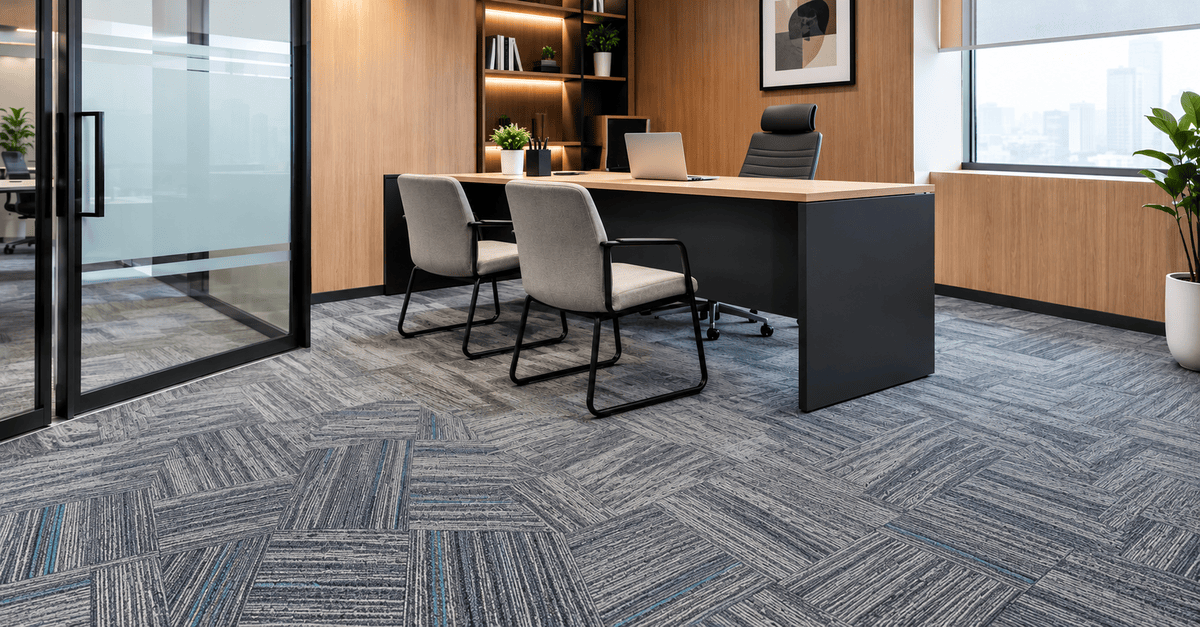
Which Flooring Is Best For Office Cabins?
When designing an office cabin, most people focus on furniture, lighting, wall colours, and storage. But have you thought about how much difference the flooring can make? The right flooring can make an office cabin look more professional, feel comfortable, and stay in good condition for years. Whether you're designing a manager's cabin, a director's…
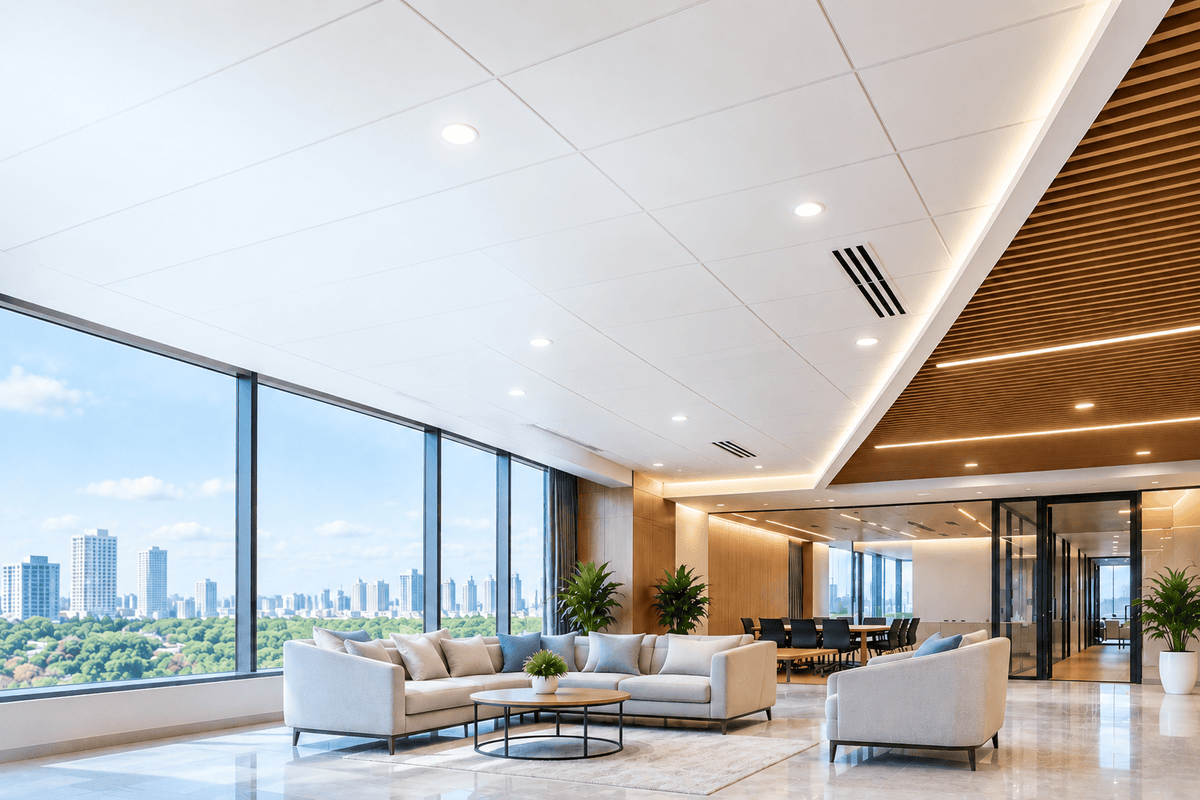
Best Ceiling Solutions In Delhi | CIPL Group
Choosing the best ceiling solutions in Delhi is an important step in creating functional, comfortable, and attractive interiors. Whether you are designing a corporate office, hotel, hospital, school, retail showroom, or residential property, the right ceiling system can improve the appearance of a space while helping manage lighting, acoustics, and building services. Today, architects, interior…