
Hospitality Interiors: Materials Checklist For Hotels & Resorts
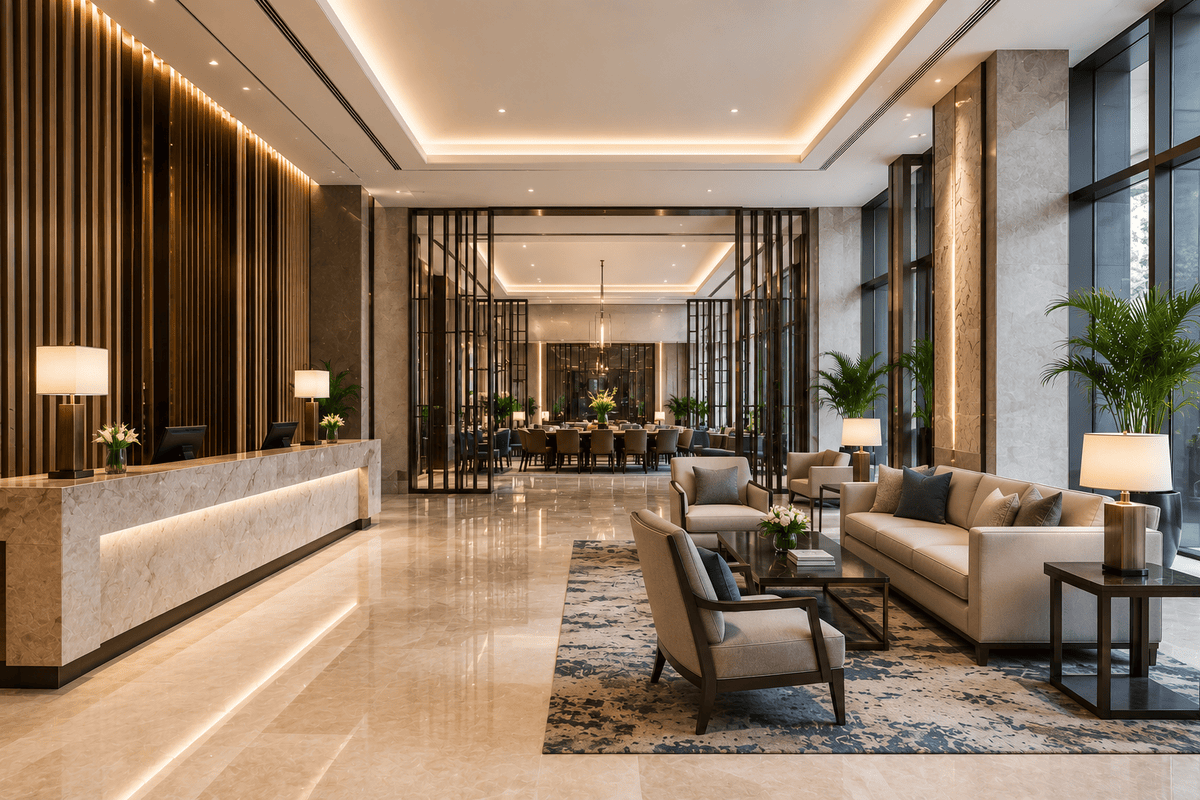
What materials are used in hotel interior design? This is one of the key questions architects, interior designers, procurement teams, and hospitality developers consider when planning a new hotel or renovation project. The answer goes far beyond choosing attractive finishes. Hotel interior design materials must balance aesthetics, durability, maintenance, safety, comfort, and long-term performance.
A five-star hotel and a budget property may have very different design concepts, but guests make a similar judgement within seconds of entering: Does the space feel well designed, comfortable, clean, and premium? That impression is influenced by much more than the mood board. It depends on whether the hotel flooring can withstand constant trolley movement, whether wall finishes remain presentable after years of cleaning, whether bathroom fittings continue to perform in hard-water conditions, and whether lighting, acoustics, furniture, and surfaces create the right atmosphere.
At CIPL Group, we have spent nearly two decades supplying interior building materials for commercial and hospitality projects across India, with experience spanning more than 50,000 projects, including sourcing for a JW Marriott property. This experience has highlighted an important reality: hotel interiors often face problems not because of poor design, but because the wrong hotel building materials were selected at the specification and procurement stage.
A material that performs well in a corporate office may not deliver the same results in a hotel. Hospitality spaces operate almost continuously, with heavy footfall, luggage movement, housekeeping activities, moisture exposure, frequent cleaning, and repeated use of guest facilities. For this reason, hospitality interior materials need to be selected according to the specific performance requirements of each area.
Why Material Selection Matters In Hotel Interior Design?
Hotel projects are among the most demanding applications for interior building materials. A corporate office may experience concentrated traffic during working hours, while a hotel can have continuous movement throughout the day and night.
Hotel lobbies experience luggage trolleys, guest traffic, and frequent cleaning. Corridors face thousands of footsteps and trolley movements over their lifetime. Guest rooms require materials that combine visual appeal with easy maintenance. Restaurants and banquet areas need durable finishes that can withstand spills and intensive cleaning. Bathrooms face moisture, humidity, hot water, hard water, and cleaning chemicals.
This makes hotel interior materials a critical part of both design and project performance.
A material specification that looks cost-effective initially can become expensive if it requires frequent repairs, replacement, or maintenance. In contrast, selecting the right hospitality-grade materials can help improve durability, reduce lifecycle costs, and maintain the intended appearance of the property for longer.
India adds another layer of complexity. Hard-water conditions in several regions can accelerate scaling and corrosion around bathroom fixtures and fittings. Coastal and eastern regions can expose materials to higher humidity and moisture. Monsoon conditions can also place additional stress on flooring systems, adhesives, doors, electrical components, and other interior elements.
At the same time, India’s hospitality sector includes everything from boutique hotels and heritage resorts to business hotels, luxury properties, serviced apartments, and large-scale resorts. Therefore, there is no single material that works for every hotel. The right hotel interior design materials depend on the property’s location, design concept, guest profile, traffic levels, climate, maintenance requirements, and budget.
Key Materials Used In Hotel Interior Design
Hotel interiors typically combine several categories of materials and products, including:
- Hotel flooring materials for lobbies, corridors, guest rooms, restaurants, and service areas
- Wall panels and wall finishes for decorative and high-traffic spaces
- Gypsum boards and partition systems for room layouts and interior walls
- Acoustic panels and acoustic solutions for guest comfort and noise control
- Hotel doors and hardware for guest rooms, public areas, and service zones
- Bathroom fittings and sanitaryware for guest bathrooms and public washrooms
- Hotel furniture and workspace solutions for rooms, lounges, restaurants, and business areas
- Lighting solutions for ambience, functionality, and wayfinding
- Insulation materials for thermal and acoustic performance
- Decorative surfaces and architectural finishes that establish the hotel’s visual identity
We’ve already covered false ceiling systems for hotels in detail in our dedicated guide to the best ceiling materials for hotels. This guide focuses on the major hotel interior design materials and building products used below the ceiling line, and how to evaluate them for real-world hospitality applications.
The following sections break down the essential hotel interior materials by category, with practical specification considerations and CIPL Group’s available solutions.
What Is The Best Flooring For A Hotel?
There is no single best flooring for a hotel. Different areas have different requirements for foot traffic, moisture, maintenance, comfort, and durability. The flooring selected for a lobby may not be suitable for a poolside area or a back-of-house kitchen.
Hotel Flooring Options By Area
- Lobbies & Reception: Engineered wood or premium vinyl can provide a warm, high-end appearance while handling regular foot traffic and luggage movement.
- Guest Rooms & Corridors: Carpet tiles can improve acoustic comfort and allow individual sections to be replaced when damaged. SPC flooring is another option for areas that need greater resistance to moisture and everyday wear.
- Banquet & Conference Halls: Durable modular flooring can work well in spaces where furniture is frequently moved and layouts change between events.
- Poolside & Wet Areas: Choose flooring with suitable slip resistance and moisture tolerance. Tiles and purpose-designed resilient flooring are common options.
- Back-of-House Areas: Kitchens, service corridors, and housekeeping areas need hard-wearing flooring that can withstand frequent cleaning, spills, and heavy movement.
CIPL Group offers a range of hotel flooring and commercial flooring solutions, including vinyl, SPC, carpet tiles, engineered wood, and modular flooring. Its portfolio includes options from brands such as Forbo, helping project teams select flooring based on the requirements of each hotel area.
Consider More Than The Initial Flooring Cost
For hotel projects, the lowest price per square foot does not always mean the lowest overall cost. Flooring should also be assessed for durability, maintenance, repairability, and expected service life.
A lobby floor, for example, needs to withstand continuous pedestrian traffic, luggage trolleys, spills, and frequent cleaning. Choosing a material that is not suited to these conditions can lead to premature wear and higher replacement costs.
For this reason, architects and procurement teams should compare initial cost and lifecycle cost before finalising hotel flooring materials.
What Bathroom Fittings Are Used In Hotels?
Hotel bathrooms need fittings that can handle frequent use, regular cleaning, moisture, and varying water quality. The right hotel bathroom fittings also contribute to the appearance and functionality of the guest bathroom.
Common fittings and sanitaryware used in hotels include:
- Concealed cisterns: Create a cleaner, more streamlined look and make them suitable for modern hotel bathrooms.
- Water-saving faucets and dual-flush toilets: Help reduce water consumption, particularly in properties focused on water efficiency and sustainability.
- Wall-hung wash basins: Provide a contemporary appearance and make floor cleaning easier for housekeeping teams.
- Shower systems: Rain showers, hand showers, and thermostatic systems can be selected based on the hotel’s room category and guest experience.
- Hard-water-resistant faucets and fittings: Important in areas where mineral deposits and water quality can affect the performance and appearance of bathroom fixtures.
- Commercial-grade sanitaryware: Toilets, wash basins, and other fixtures should be selected for the higher frequency of use expected in hotels.
CIPL Group supplies hotel sanitaryware and bathroom fittings, including wash basins, toilets, concealed cisterns, faucets, and shower systems. Its portfolio includes products from brands such as Hindware, with options suitable for hospitality projects. The available range can be explored under sanitaryware on the CIPL website.
Hard Water Considerations For Indian Hotels
Water quality should be considered when specifying bathroom fittings for hotels in India. Hard water can leave mineral deposits on faucets, showerheads, and sanitaryware and may affect their appearance and maintenance over time.
For properties operating in hard-water regions, procurement teams should consider fittings that are easy to clean, resistant to corrosion and scaling, and supported by suitable maintenance practices. This can help reduce frequent cleaning and replacement while keeping hotel bathrooms looking well maintained.
What Is The Best Lighting For A Hotel Lobby & Guest Rooms?
The best hotel lighting depends on the function of each space. Guest areas need comfortable, inviting light, while kitchens, service areas, and staff spaces need brighter illumination for practical tasks. Energy efficiency and ease of maintenance are also important when lighting hundreds of hotel rooms and common areas.
Common hotel lighting solutions include:
- Warm LED downlights: Suitable for guest rooms, lobbies, lounges, and corridors where a comfortable and welcoming atmosphere is important.
- LED panel lights: Useful in kitchens, offices, service areas, and other back-of-house spaces that require even, functional illumination.
- Floodlights and outdoor lighting: Used for hotel facades, entrances, pathways, parking areas, pool decks, and landscaped spaces.
- Dimmable lighting: Allows guest rooms and selected public areas to adjust light levels according to use and time of day, helping improve both comfort and energy efficiency.
CIPL Group offers a range of lighting solutions, including LED panel lights, downlights, floodlights, and outdoor fixtures, with options from brands such as Havells.
Choosing The Right Colour Temperature
Colour temperature should be selected according to how the space is used. 2700K–3000K warm white is generally suitable for guest rooms, hotel lobbies, lounges, and other guest-facing areas because it creates a warmer and more relaxed environment.
For kitchens, laundry rooms, maintenance areas, and staff workspaces, 4000K–5000K lighting can provide clearer, more functional illumination.
Using the same colour temperature throughout a hotel can make some areas feel either too cold or too dim. Separating guest-facing and back-of-house lighting helps create the right balance between hotel ambience, visibility, energy efficiency, and functionality.
Why Fire-Rated Doors Mandatory In Hotels?
Fire-rated doors are an important part of hotel fire safety and building compliance in India. Their requirement and fire-resistance rating depend on the building’s design, occupancy, fire strategy, and applicable codes and approvals. They are commonly specified for areas such as staircases, fire exits, corridors, service areas, electrical rooms, and other fire-compartmentation locations.
For hotel projects, door selection typically includes:
- Fire-rated doors: Used where fire compartmentation and protected escape routes require certified fire-resistant door assemblies.
- Acoustic doors: Suitable for guest rooms, meeting rooms, and other areas where reducing noise transmission is important.
- Wooden or veneered doors: Commonly used for guest rooms and suites where appearance and interior design are key considerations.
- Flush doors: Practical for back-of-house, staff, utility, and service areas where functionality and cost are priorities.
- Metal doors: Often used in service, plant, utility, and other areas that require a more robust door system.
CIPL Group offers a range of hotel door solutions, including fire-rated, acoustic, wooden, metal, and flush door options, with solutions from brands such as Hörmann. This allows project teams to source different door requirements through a single interior building materials partner.
Understanding Fire Ratings For Hotel Doors
Fire-rated doors are specified according to the period for which the complete door assembly can provide the required fire resistance under the applicable test standard. Common ratings include 30, 60, 90, and 120 minutes, although the required rating varies by application.
Architects and project teams should not select a fire rating based on the door alone. The door leaf, frame, hardware, seals, glazing where applicable, installation, and certification all need to meet the required specification.
For hotels, the correct fire-rated door should therefore be selected based on the approved fire strategy, applicable Indian codes, and project-specific requirements rather than simply choosing the highest available rating.
What Door Hardware & Locking Systems Do Hotels Use?
Hotel doors are opened and closed hundreds of times during their service life, so hotel door hardware needs to be durable, reliable, and easy to maintain. Guest room doors also require secure access control, while service and back-of-house doors often need hardware designed for heavier use.
Common door hardware and locking systems used in hotels include:
- Electronic hotel locks: Card-based, RFID, or smart locking systems provide controlled access to guest rooms and help hotels manage entry permissions.
- Heavy-duty hinges: Suitable for guest rooms, service areas, and other high-traffic doors where frequent opening and closing can place greater stress on the hardware.
- Door handles and levers: Should be selected for durability, comfortable operation, and compatibility with the hotel’s interior design.
- Door closers and accessories: Help doors close correctly and can be important for fire-rated and high-traffic applications.
- Corrosion-resistant hardware: Useful for pool areas, outdoor-facing doors, coastal properties, and other locations exposed to moisture.
CIPL Group offers hotel door hardware and architectural hardware, including locking systems, handles, hinges, and related door accessories through its architectural hardware catalogue.
For hotel projects, hardware should be specified according to traffic levels, door weight, location, security requirements, fire-rating requirements, and exposure to moisture rather than selecting hardware based only on appearance or purchase price.
Why Is Hotel Furniture Different From Home Furniture?
Hotel furniture is designed for much heavier use than residential furniture. Guest rooms, lobbies, restaurants, business centres, and conference areas can see continuous daily use, so furniture needs to combine durability, comfort, easy maintenance, and design.
Hospitality furniture commonly includes:
- Modular furniture: Useful for banquet halls, meeting rooms, and conference spaces where layouts need to change regularly.
- Ergonomic seating: Suitable for business centres, workspaces, lounges, and extended-stay rooms where guests may work for several hours.
- Durable upholstery: High-traffic seating benefits from fabrics that are resistant to abrasion, stains, and frequent cleaning.
- Commercial-grade tables and workstations: Designed to withstand repeated use while maintaining their appearance.
- Hotel storage and casegoods: Guest room furniture needs to provide practical storage while fitting the overall room design.
CIPL Group offers hotel furniture and commercial furniture solutions, including ergonomic chairs, modular workstations, conference tables, and storage solutions. The portfolio includes products from brands such as Haworth, suitable for hospitality and professional environments.
Why Business Hotels Need Ergonomic Furniture
Business hotels increasingly need furniture that supports both work and hospitality. Business centres, co-working areas, lounges, and extended-stay rooms may be used for several hours at a time, making comfortable seating and functional workstations important.
For these spaces, furniture should be evaluated for ergonomics, durability, ease of maintenance, flexibility, and design compatibility rather than treated the same way as standard residential furniture.
Why Does Acoustic Insulation Matter So Much In Hotels & Resorts?
Acoustic insulation is important in hotels because it helps reduce noise travelling between guest rooms and other occupied spaces. Guests expect a comfortable and quiet environment, particularly at night, so acoustic performance should be considered when designing guest room walls, floors, ceilings, and service areas.
Key insulation applications in hotels include:
- Acoustic insulation: Used in partitions and floor systems between guest rooms, corridors, meeting rooms, and other areas where noise transfer needs to be controlled.
- Thermal insulation: Helps improve the thermal performance of walls, roofs, and building envelopes, which can support more efficient HVAC operation.
- Fire-rated insulation: Used in systems where fire resistance and compartmentation are required, including service risers and selected back-of-house areas.
CIPL Group offers thermal, acoustic, and fire-rated insulation solutions through its insulation materials portfolio. The appropriate system depends on factors such as the building design, climate, wall or floor construction, acoustic requirements, and applicable fire-safety specifications.
Why Acoustic Insulation Should Be Specified Early?
Insulation is installed behind walls, floors, and other finished surfaces, so it can be easy to overlook during material selection and cost reviews. However, replacing or upgrading an acoustic system after construction can be difficult and expensive.
For hotel projects, architects and developers should consider acoustic insulation during the initial design and specification stage, particularly between guest rooms and around areas that generate noise, such as corridors, lifts, restaurants, service zones, and plant rooms.
The goal is simple: reduce unwanted noise before it becomes a guest complaint.
What Electrical Cabling Is Required In Hotel Buildings?
Hotel electrical systems need to support continuous loads from guest rooms, lighting, HVAC, kitchens, lifts, pumps, security systems, and other building services. Cable selection should therefore be based on the project’s load requirements, installation conditions, fire-safety requirements, and applicable electrical standards.
Common cable types used in hotel buildings include:
- FRLS cables: Used in applications where reduced flame spread and lower smoke emission are required, particularly in occupied areas and escape routes, subject to the project’s electrical and fire-safety specifications.
- Power cables: Used for distributing electrical power to equipment, lighting systems, HVAC, pumps, and other major loads.
- Electrical wires: Used for internal wiring in lighting, sockets, and other electrical circuits according to the required load and installation method.
- Control cables: Used for systems such as HVAC controls, building management systems, access control, and other automation applications.
Power cables, electrical wires, FRLS cables, and control cables — including options from Havells — are available through CIPL Group’s wires and cables range for hotel and commercial projects.
Cable selection should not be based only on current capacity. Project teams should also consider voltage rating, conductor size, insulation type, fire performance, installation environment, voltage drop, and applicable Indian electrical standards before finalising the specification.
Do Hotel Interior Materials Affect Green Building Certification?
Yes. Hotel interior material selection can contribute to green building certification and overall building performance. For hospitality projects pursuing systems such as LEED, IGBC, or GRIHA, architects and procurement teams need to consider factors such as water efficiency, energy use, indoor environmental quality, and responsible material selection.
Key areas include:
- Water-efficient sanitaryware: Dual-flush toilets, low-flow faucets, and efficient shower systems can help reduce water consumption.
- Energy-efficient LED lighting: LED fixtures, combined with appropriate controls, can help reduce lighting energy use.
- Low-VOC materials: Flooring, adhesives, paints, furniture, and other interior products with suitable low-emission characteristics can support better indoor environmental quality.
- Recyclable and responsibly sourced materials: Certain flooring, furniture, insulation, and other products may contribute to material-related sustainability requirements, depending on the certification system and product documentation.
- Thermal insulation: Properly specified insulation can improve the building envelope’s thermal performance and help reduce heating and cooling demand.
CIPL Group offers a range of sustainable interior building materials for hospitality projects, including energy-efficient lighting, water-efficient sanitaryware, flooring, insulation, and other interior solutions.
However, a product does not automatically earn a certification credit simply because it is labelled “green” or “eco-friendly.” The actual contribution depends on the certification system, project criteria, product documentation, and how the material is specified and installed.
For hotel developers, sustainability should therefore be considered during the design and material specification stage, rather than added as a final procurement requirement.
A Real Example: Sourcing For A JW Marriott Property
Large hotel projects require more than high-quality materials. They also require coordinated sourcing, reliable supply, and timely delivery across multiple product categories.
CIPL Group has supplied materials for a JW Marriott property as part of its broader portfolio of 50,000+ projects. The requirement was not simply to source products that met the property’s design and quality expectations, but to coordinate the supply of materials such as flooring, sanitaryware, and other interior fit-out products with the project’s construction schedule.
This highlights an important consideration when selecting hotel building materials: the right product needs to be available when the project needs it. Delays in material supply can affect installation schedules, subsequent trades, and ultimately the project handover.
For large hospitality projects, working with an interior building materials distributor that can coordinate multiple product categories and support supply across locations can simplify procurement and reduce the need to manage several single-category suppliers.
Hotel Interior Materials At A Glance
| Material Category | Key Application Areas | What to Consider |
|---|---|---|
| Flooring | Lobby, corridors, guest rooms, banquet halls | Durability, slip resistance, acoustic performance, ease of maintenance |
| Sanitaryware | Guest bathrooms, public washrooms | Water efficiency, hard-water resistance, durability, finish quality |
| Lighting | Guest rooms, lobby, corridors, facade | Colour temperature, energy efficiency, illumination, lighting controls |
| Doors | Guest rooms, corridors, staircases, service areas | Fire rating, acoustic performance, durability, security |
| Door Hardware | Guest room entrances, service doors | Access control, durability, corrosion resistance, frequency of use |
| Furniture | Lobby, guest rooms, banquet halls, business centres | Durability, ergonomics, flexibility, ease of maintenance |
| Insulation | Guest room walls, floors, facades, service areas | Acoustic performance, thermal efficiency, fire resistance |
| Wires & Cables | Guest floors, corridors, HVAC, BMS | Load capacity, fire performance, cable type, installation requirements |
| Ceilings | Lobby, guest floors, corridors, banquet halls | Acoustic performance, moisture resistance, aesthetics, maintenance — see our dedicated hotel ceiling guide |
Why Choose Hotel Interior Materials From One Distributor?
Hotel projects require materials across several categories, including flooring, sanitaryware, lighting, doors, hardware, insulation, furniture, and electrical products. Managing a separate supplier for each category can increase coordination and delivery work.
CIPL Group provides multiple hotel interior materials through one supply partner. With 150+ professionals and an 11-branch network, CIPL supports sourcing and supply across categories such as flooring, sanitaryware, lighting, doors, architectural hardware, insulation, wires and cables, and other interior solutions.
Working with one distributor can help project teams:
- Reduce the number of suppliers to coordinate
- Simplify procurement and communication
- Coordinate deliveries across different material categories
- Track orders through a single supply partner
- Maintain consistent product and quality requirements
For large hospitality projects, this approach can make material sourcing and project coordination more straightforward.
View CIPL Group’s project portfolio or learn more about CIPL Group.
Frequently Asked Questions
What Materials Are Used In Hotel Interior Design?
Hotel interior design uses flooring (vinyl, SPC, carpet tiles, engineered wood), sanitaryware, LED lighting, fire-rated and acoustic doors, architectural hardware, thermal and acoustic insulation, FRLS electrical cabling, false ceiling systems, and commercial-grade furniture, each specified for 24/7 use rather than residential wear levels.
What Is The Best Flooring For A Hotel Lobby?
Engineered wood or premium vinyl flooring is generally preferred for hotel lobbies in India, offering a warm, high-end look with far lower maintenance than natural stone, while carpet tiles and SPC flooring are better suited to guest corridors and high-traffic zones.
Why Is Hotel Furniture Different From Home Furniture?
Hotel furniture, often called hospitality-grade furniture, uses reinforced frames, abrasion-tested upholstery, and fire-safety-rated materials to withstand daily use by guests, unlike residential furniture, which isn’t built for that level of continuous wear.
What Is FRLS Cable And Why Is It Used In Hotels?
FRLS stands for Fire Retardant Low Smoke, a cable type used throughout hotel guest floors and corridors because it slows fire spread and reduces toxic smoke, which is critical for guest evacuation safety.
Can One Supplier Provide All Hotel Interior Materials?
Yes — distributors like CIPL Group supply flooring, sanitaryware, lighting, doors, hardware, insulation, wiring, and furniture together, reducing the number of vendors a hotel project needs to coordinate.
What Colour Temperature Of Lighting Is Best For Hotel Guest Rooms?
Warm white LED lighting in the 2700K–3000K range is best for hotel guest rooms and lobbies, since it reads as inviting and premium, while cooler 4000K–5000K lighting is better reserved for back-of-house and staff areas.
Do Hotel Interior Materials Affect Green Building Certification?
Yes, water-saving sanitaryware, energy-efficient LED lighting, low-VOC materials, and thermal insulation all contribute directly to LEED, IGBC, or GRIHA certification credits, making material specification a meaningful part of a hotel’s sustainability strategy.
How Does Hard Water Affect Hotel Bathroom Fittings In India?
Hard water, common across North India, accelerates corrosion and limescale buildup on faucets and fittings, which is why hospitality projects in these regions should specify fittings rated for hard water conditions rather than standard residential-grade fixtures.
Planning a hotel or resort interior fit-out? Get in touch with CIPL Group for a complete hospitality materials quote, or download our product brochure to see our full hospitality-grade range.
Recommeded Blogs
Best Flooring for Hospitals in India (2026): Types, Costs & NABH Requirements
In a hospital, the floor is not just a finish. It is part of infection control, patient safety and the building's running cost. Every day it takes trolley wheels, wheelchairs, spills, blood, disinfectants and thousands of footsteps. A wrong choice shows up fast: grout lines that hold bacteria, cracked tiles under stretchers, slippery corridors, or…
Which Flooring Is Best For Office Cabins?
When designing an office cabin, most people focus on furniture, lighting, wall colours, and storage. But have you thought about how much difference the flooring can make? The right flooring can make an office cabin look more professional, feel comfortable, and stay in good condition for years. Whether you're designing a manager's cabin, a director's…
Best Ceiling Solutions In Delhi | CIPL Group
Choosing the best ceiling solutions in Delhi is an important step in creating functional, comfortable, and attractive interiors. Whether you are designing a corporate office, hotel, hospital, school, retail showroom, or residential property, the right ceiling system can improve the appearance of a space while helping manage lighting, acoustics, and building services. Today, architects, interior…