Knauf vs Gyproc: Which Gypsum Board Is Really Better? (2026 Comparison)
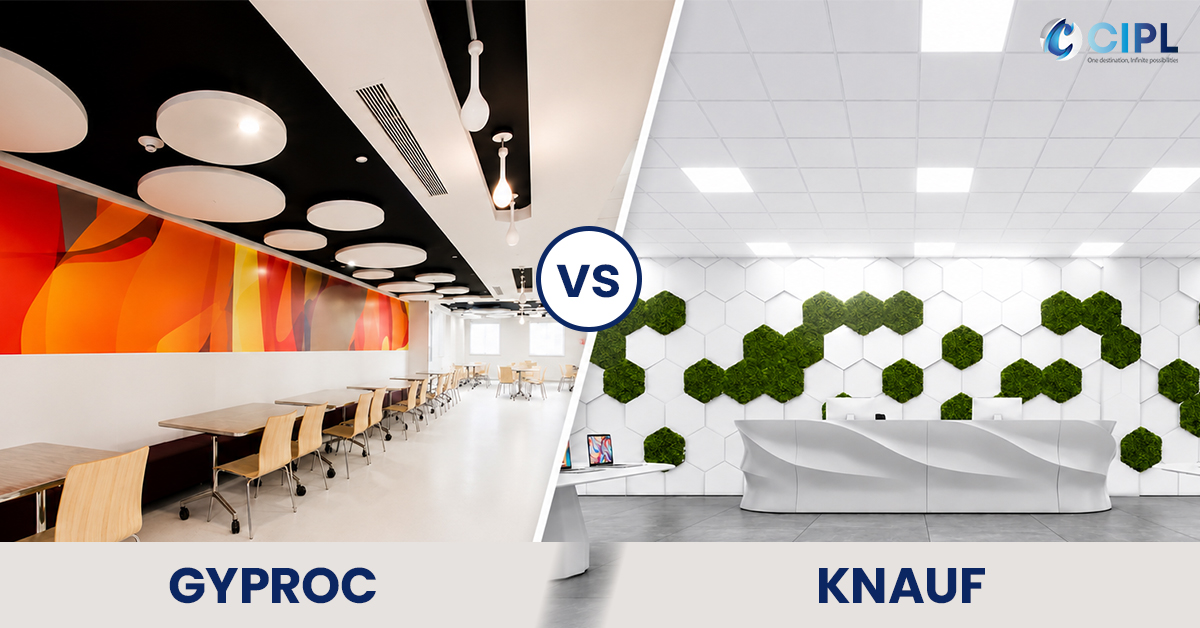
If you’ve been searching “knauf vs gyproc” or “gyproc vs knauf gypsum board” and getting a dozen different answers, you’re not alone. These are the two biggest names in false ceilings and drywall in India, and almost every architect, contractor, or PMC ends up comparing them at some point before finalising a project.
So which one actually wins — Knauf or Gyproc (Saint-Gobain)? The honest answer is: it depends on what you’re building, your budget, and what’s easily available in your city. But there are real technical differences worth knowing before you specify either brand. Let’s break it down properly — composition, moisture resistance, fire rating, acoustics, pricing, and everything else people usually search for.
Knauf vs Gyproc: Quick Comparison at a Glance
| Factor | Gyproc (Saint-Gobain) | Knauf |
|---|---|---|
| Core material | Dense crystalline gypsum core | Synthetic gypsum with organic reinforcement |
| Moisture resistance | AquaLine (silicone-based) | MR board (hydrophobic additives) |
| Fire rating | FireLine, 30 min–4 hrs | Fire Shield, controlled shrinkage core |
| Acoustic range | Gyptone / Rigitone, up to 0.80 NRC | Cleaneo, with built-in VOC purification |
| Availability in India | Very wide, mature distribution | Growing steadily, strong in metro projects |
| Typical use case | Commercial + residential, pan-India | Large infrastructure & corporate projects |
Neither brand is objectively “bad” — both are internationally certified systems that outperform any unbranded or generic gypsum board by a wide margin. The real comparison is Knauf vs Gyproc for your specific site conditions, not one brand being universally superior.
Gyproc vs Gypsum: What’s the Difference?
A lot of people search “gyproc vs gypsum” or “difference between gyproc and gypsum” assuming these are two different materials — they’re not. Gypsum is the raw mineral (calcium sulfate) used to make plasterboard. Gyproc is Saint-Gobain’s branded, engineered gypsum board — so asking “gyproc vs gypsum” is really asking “branded gypsum board vs generic gypsum board.” The same logic applies to Knauf: it’s also a gypsum board, just from a different manufacturer with its own core formulation and additives.
This distinction matters commercially — unbranded gypsum board is cheaper per square foot but far more prone to sagging, joint cracking, and inconsistent thickness across batches.
Knauf Gypsum Board vs Saint-Gobain: Core Composition and Strength
Gyproc ceiling boards use a dense, pure crystalline gypsum core wrapped in high-bond liner paper. This gives clean scoring edges and reduces breakage during on-site cuts — useful on projects with a lot of curved or angular ceiling detailing.
Knauf gypsum board uses a highly pure synthetic gypsum core reinforced with organic additives, giving it strong core density and impact resistance. This makes Knauf boards a solid choice for high-traffic corridors and partition walls that take regular knocks.
In short: Gyproc edges ahead on cutting precision and finish quality; Knauf edges ahead on impact resistance in high-footfall areas.
Is Knauf Gypsum Board Good or Bad?
Short answer: Knauf gypsum board is good — it’s a globally certified, German-engineered product used extensively in commercial and infrastructure projects worldwide, including major developments in India. Reviews and site feedback generally rate it well for density, fire performance, and moisture resistance, particularly the Knauf MR (moisture resistant) board and Knauf Fire Shield range.
Where Knauf sometimes falls short in India isn’t the product — it’s availability. In smaller cities, stock and authorised dealer access can be less consistent than Gyproc, which has decades of distribution infrastructure behind it.
Is Gyproc Gypsum Board Good or Bad?
Gyproc gypsum board is also good, and arguably the safer default choice in India simply because of how mature its supply chain is. Saint-Gobain has been manufacturing here for years, so batch consistency, dealer support, and product availability are rarely an issue — even for fast-tracked projects. Site engineers commonly report fewer supply delays with Gyproc compared to newer entrants.
So when people ask “gyproc vs saint gobain” — that’s actually not a fair comparison, since Gyproc is Saint-Gobain’s ceiling and drywall brand.
Moisture Resistance: Which Handles Humidity Better?
For coastal cities like Mumbai, Chennai, and Kochi — or any building with heavy centralised HVAC — moisture resistance decides how long your ceiling stays flat and sag-free.
- Gyproc AquaLine uses silicone-based water-repellent additives in the core.
- Knauf MR board uses hydrophobic additives for similar sag-free performance in damp environments.
Both are engineered for humid conditions and are commonly specified for kitchens, bathrooms, and basements. If your project is in a high-humidity zone, either brand’s moisture-resistant range will outperform standard board significantly — the generic (non-MR) version of either brand should be avoided in wet areas.
Fire Rating Comparison: Gyproc FireLine vs Knauf Fire Shield
Passive fire protection isn’t optional for commercial buildings — it’s a compliance requirement.
- Gyproc FireLine uses fiberglass micro-particles in its core and, with the full certified framework, delivers tested fire ratings from 30 minutes up to 4 hours.
- Knauf Fire Shield uses a heavily fiberglass-reinforced core that shrinks at a controlled, minimal rate under flame exposure, helping keep evacuation routes structurally stable during a fire.
Both systems are only fire-rated as complete assemblies — board, metal framing, screws, and jointing compound all from the same brand. Mixing components voids the rating (and the warranty).
Acoustic Performance: Which Is Quieter?
Open-plan offices and boardrooms need real sound control, not just a false ceiling for looks.
- Gyproc Gyptone / Rigitone — perforated boards (square, hex, or round patterns) with acoustic tissue backing, delivering NRC up to 0.80.
- Knauf Cleaneo — acoustic board with sound absorption plus a built-in air-purification effect that breaks down indoor VOCs, which is a nice add-on for corporate wellness-focused fit-outs.
If pure sound absorption (NRC rating) is your priority, Gyptone/Rigitone gives you a well-documented number to design around. If indoor air quality is also a project goal, Cleaneo adds value beyond acoustics.
Knauf vs Saint-Gobain Gypsum Board Price in India
Pricing for both brands varies by board thickness (9.5mm, 12.5mm, 15mm), board type (standard, MR, fire-rated, acoustic), city, and order volume — so there’s no single fixed number that applies nationally. As a general trend:
- Standard 12.5mm boards from either brand are priced closely, usually within a similar band per square foot.
- Fire-rated and moisture-resistant variants cost more than standard boards, across both brands.
- Acoustic boards (Gyptone/Rigitone, Cleaneo) sit at the premium end of the range.
For accurate, current pricing, it’s always best to get a wholesale quote from an authorised distributor rather than relying on generic online figures — rates shift with input costs and project volume. Browse CIPL Group’s ceiling material catalogue for current commercial pricing on both Gyproc and Knauf systems.
Gyproc Drywall Screws, Jointing Compound & Paper Tape: Don’t Overlook the Accessories
A ceiling system is only as good as its accessories, and this is where a lot of installers cut corners.
- Gyproc drywall screws are designed to match board thickness precisely, preventing the paper face from tearing during fixing.
- Gyproc jointing compound (Pro-Fill, Pro-Top, Easi-Fill) and Gyproc paper tape are formulated to work together for crack-free, feather-edge joints.
- Knauf offers equivalent proprietary screws, jointing compounds, and tapes engineered specifically for its board core.
Never mix system components across brands. Using Gyproc board with non-Gyproc screws or jointing compound (or vice versa with Knauf) can void the manufacturer warranty and compromise the fire rating. If you’re sourcing a complete Gyproc or Knauf system — boards, metal channels, screws, and jointing compound — check our hardware and fixings range to keep everything consistent.
Why Buying From an Authorised Distributor Matters?
Both Gyproc and Knauf have had counterfeit and grey-market products circulate in the Indian market — particularly screws and jointing compounds, which are harder for site staff to visually verify. Buying through an authorised national distributor protects you on three fronts:
- Genuine components — certified boards, channels, and jointing compounds sourced as one matched system.
- Consistent batch quality — uniform thickness and drying time across large orders, which matters on big commercial floor plates.
- Commercial pricing support — wholesale rates for bulk or phased procurement.
CIPL Group supplies both Gyproc and Knauf ceiling systems as an authorised distributor — see our full ceiling solutions range for genuine, project-ready stock.
Knauf vs Gyproc: Which Should You Choose?
There’s no universal winner — the right call depends on your project:
- Choose Gyproc if: you need guaranteed local availability, fast turnaround, or you’re working in a city where Saint-Gobain’s distribution network is strongest.
- Choose Knauf if: your project demands high impact resistance in heavy-traffic zones, or you’re already working within a Knauf-specified system on a larger infrastructure job.
- Either way: stick to one brand’s complete system per installation — board, frame, screws, and compound — to protect your fire rating and warranty.
Knauf vs Gyproc Plasterboard for Residential Projects
Most of the comparison above is written with commercial fit-outs in mind, but homeowners and residential contractors search “knauf plasterboard” and “gyproc gypsum board price” just as often — usually for false ceilings, partition walls, or POP alternatives in apartments and villas.
For residential use, the calculus shifts slightly:
- Board thickness is usually lighter (9.5mm–12mm) than commercial specs, since residential spans and loads are smaller.
- Moisture-resistant variants (Gyproc AquaLine or Knauf MR) are worth the small price premium in kitchens, bathrooms, and utility areas — this is the single most common site issue we see reported in residential ceilings within 2–3 years of a low-cost, non-MR install.
- Acoustic boards (Gyptone, Rigitone, Cleaneo) are usually overkill for a typical home unless it’s a home theatre, music room, or a unit facing a busy road.
- Local dealer stock matters more here than on large commercial jobs, since residential orders are smaller and contractors often can’t wait weeks for a special order — this is where Gyproc’s wider distribution tends to make it the more convenient pick for tier-2 and tier-3 city homes.
If you’re renovating or building a home and unsure which system fits your budget, it’s worth asking your distributor for both a Gyproc and a Knauf quote side-by-side before locking in a contractor.
Gypsum Board Manufacturers in India: Where Do Knauf and Gyproc Fit In?
Beyond Knauf and Gyproc, India’s gypsum board market includes several other manufacturers, but these two remain the two most specified brands on commercial and institutional projects because of their certified fire and acoustic systems. When people search “gypsum board manufacturers in India” or “gypsum board brands in india,” they’re usually trying to shortlist between a handful of names — and in almost every case, the shortlist narrows down to Gyproc vs Knauf once fire rating, moisture resistance, or acoustic performance becomes a project requirement, since unbranded or regional boards rarely carry independently tested certifications for these.
That’s not to say generic boards don’t have a place — for low-spec, budget-constrained interior partitions with no fire or acoustic requirement, they can work. But for any space where compliance, insurance, or green-building certification (LEED, WELL, IGBC) is involved, sticking to a certified system from Gyproc or Knauf removes a lot of risk from the equation.
Common Installation Mistakes That Undermine Either System
Even the best board fails prematurely if installation practices are sloppy. A few recurring issues we see on-site, regardless of brand:
- Mixing brand components — using Gyproc board with Knauf screws (or the reverse). This is the single fastest way to void a warranty and compromise a fire rating.
- Skipping staggered joints — lining up short edges of boards in a continuous run instead of staggering them concentrates stress and leads to visible cracking within months.
- Jointing in poor conditions — applying jointing compound during extreme humidity or temperature swings prevents proper curing and causes joint lines to “ghost” through paint later.
- Ignoring frame spacing specs — using wider metal channel spacing than the manufacturer’s tested system to save on framing cost, which increases sag risk over time, especially with acoustic or perforated boards.
- Using non-MR board in wet areas — a common shortcut in residential jobs that almost always leads to sagging or mould within a couple of years.
None of these are brand-specific problems — they’re installation discipline problems, and they affect Gyproc and Knauf systems equally if skipped.
Need help specifying the right ceiling system for your next project? Our team supplies genuine Gyproc and Knauf systems — boards, framing, screws, and jointing compounds — for commercial and residential developments across India. Get in touch with CIPL Group for project-specific quotes and technical support.
Frequently Asked Questions
What Is Gypsum Board Used For?
Gypsum board is used for constructing interior walls, ceilings, partitions, and decorative features in residential, commercial, and industrial buildings, providing a smooth finish along with fire resistance, sound insulation, and easy installation.
Is Gypsum Board Soundproof?
Gypsum board is not completely soundproof, but it helps reduce noise by improving sound insulation. When combined with insulation, resilient channels, or multiple layers, it can significantly improve acoustic performance in walls and ceilings.
What Is Gyproc, And Is It The Same As Saint-Gobain?
Gyproc is Saint-Gobain’s gypsum board and ceiling systems brand — so “Gyproc vs Saint-Gobain” isn’t really a comparison, since Gyproc is a Saint-Gobain product line
Is Knauf Or Gyproc Better For A False Ceiling?
Both are suitable for false ceilings. Gyproc tends to be the more convenient default in cities with strong Saint-Gobain dealer coverage, while Knauf is a strong option for larger, spec-driven commercial projects where its impact resistance and system range are a good fit.
What Is the Price Difference Between Knauf And Gyproc Gypsum Board?
Standard 12.5mm boards from both brands are usually priced within a similar range per square foot, with fire-rated, moisture-resistant, and acoustic variants costing more than standard board across both brands. Exact pricing depends on city, thickness, and order volume — get a current wholesale quote for accuracy.
Recommeded Blogs

Best Flooring for Hospitals in India (2026): Types, Costs & NABH Requirements
In a hospital, the floor is not just a finish. It is part of infection control, patient safety and the building's running cost. Every day it takes trolley wheels, wheelchairs, spills, blood, disinfectants and thousands of footsteps. A wrong choice shows up fast: grout lines that hold bacteria, cracked tiles under stretchers, slippery corridors, or…
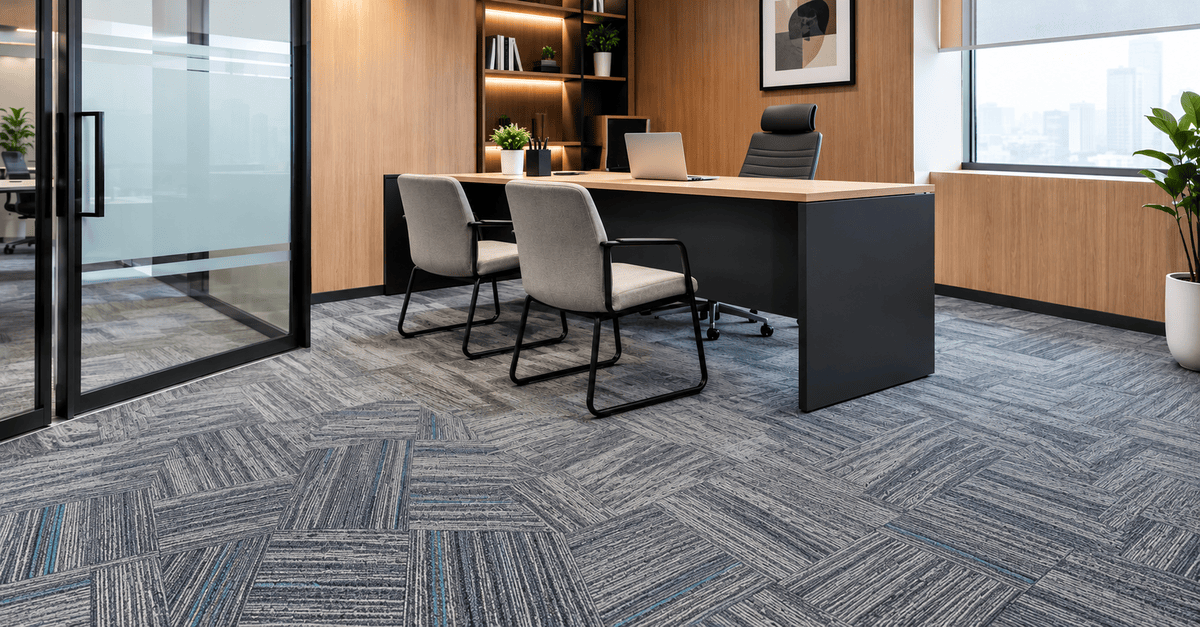
Which Flooring Is Best For Office Cabins?
When designing an office cabin, most people focus on furniture, lighting, wall colours, and storage. But have you thought about how much difference the flooring can make? The right flooring can make an office cabin look more professional, feel comfortable, and stay in good condition for years. Whether you're designing a manager's cabin, a director's…
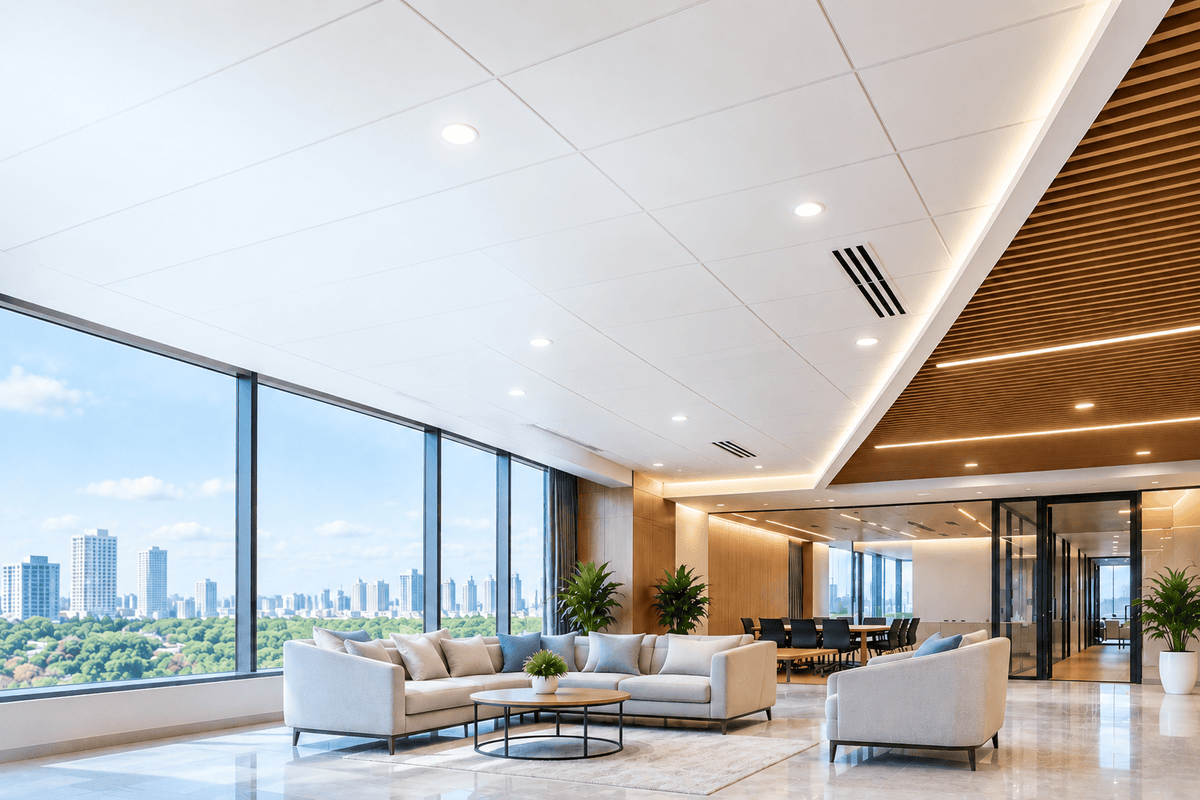
Best Ceiling Solutions In Delhi | CIPL Group
Choosing the best ceiling solutions in Delhi is an important step in creating functional, comfortable, and attractive interiors. Whether you are designing a corporate office, hotel, hospital, school, retail showroom, or residential property, the right ceiling system can improve the appearance of a space while helping manage lighting, acoustics, and building services. Today, architects, interior…