
Best Soundproof Office Partitions: Best Materials & Techniques
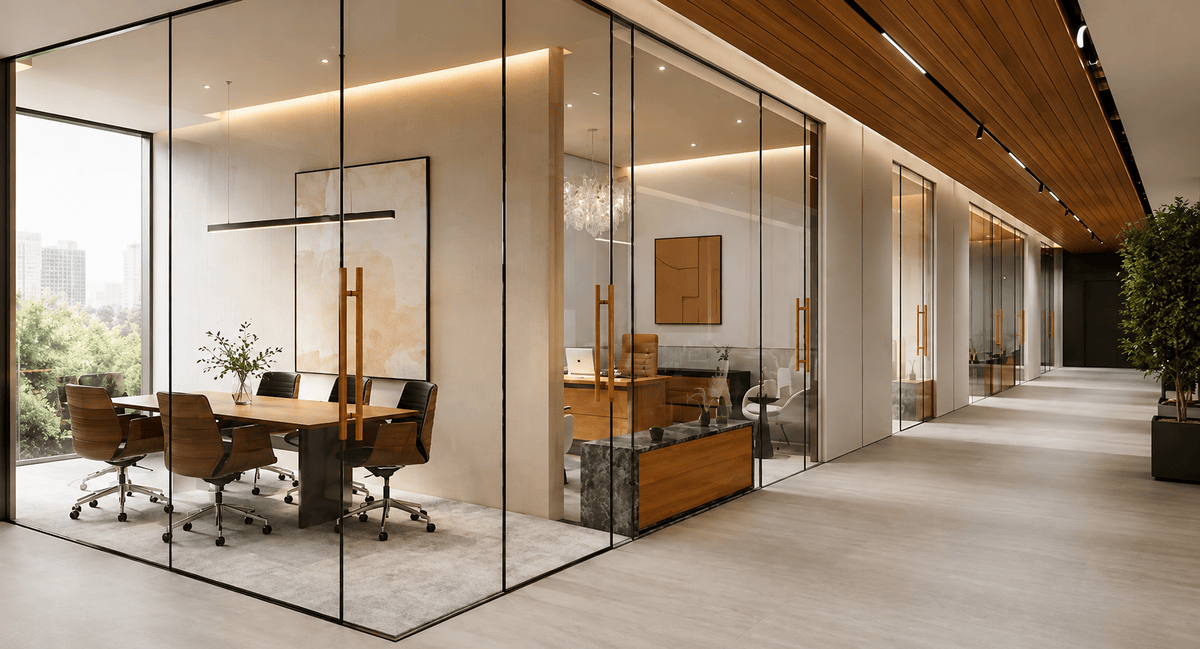
Modern offices are designed to encourage collaboration, but excessive noise often reduces productivity and employee satisfaction. Conversations, ringing phones, office equipment, and meeting room discussions can easily travel through poorly designed spaces. This is why soundproof office partitions have become an important part of commercial interior design. They help create quieter environments, improve speech privacy, and support focused work without compromising the flexibility of modern office layouts.
Whether you are planning a new office fit-out or renovating an existing workspace, selecting the right materials and installation techniques is essential. By combining high-quality partition systems with acoustic treatments, businesses can create workspaces that are both functional and comfortable.
Why Soundproof Office Partitions Matter?
Office acoustics directly affect productivity, privacy, and communication. In noisy workplaces, employees are more likely to lose focus, experience fatigue, and struggle with confidential conversations. High-performance acoustic partitions reduce sound transmission between rooms and work zones, creating quieter and more functional spaces.
They are ideal for executive cabins, conference rooms, HR departments, healthcare facilities, educational institutions, coworking spaces, and other commercial environments where speech privacy and concentration are important.
Key benefits of soundproof office partitions include:
- Improved employee focus and productivity
- Better speech privacy for meetings and confidential discussions
- Reduced distractions from surrounding work areas
- Clearer communication in meeting rooms
- More professional and comfortable client interactions
- Flexible space planning without major construction
Installing acoustic office partitions helps businesses create quieter, more efficient workplaces that support both individual work and team collaboration.nly about reducing noise but also about creating an environment where employees can communicate and collaborate effectively.
What Is the Best Material for Soundproofing an Office Partition?
The best soundproof office partitions use a multi-layer drywall system with gypsum boards, high-density mineral wool insulation, and acoustic sealants to minimize sound transmission. The partition’s performance also depends on factors such as board thickness, insulation density, air gaps, and proper sealing of joints and openings.
For improved acoustic performance, these partitions can be paired with PET acoustic panels and acoustic ceiling systems to absorb reflected sound and reduce echo. This combination creates a quieter, more comfortable workspace by improving speech privacy, reducing noise distractions, and enhancing overall acoustic performance.
What Is STC Rating?
STC (Sound Transmission Class) measures how effectively a wall or partition blocks airborne sound. A higher STC rating means better sound insulation and greater speech privacy.
| STC Rating | Performance |
|---|---|
| 25–30 | Normal conversations can be heard clearly |
| 35–40 | Loud speech is reduced |
| 45–50 | Good privacy for meeting rooms |
| 50–60 | Excellent sound insulation |
| 60+ | High-performance acoustic environments |
For most commercial offices, an STC (Sound Transmission Class) rating of 45–55 provides an effective balance between acoustic privacy and cost. Partitions within this range significantly reduce speech transmission, making them suitable for executive cabins, meeting rooms, HR offices, and conference rooms. For spaces requiring higher confidentiality, such as boardrooms, legal offices, or healthcare consultation rooms, partitions with an STC rating above 55 offer superior sound isolation.
Difference Between Sound Insulation & Sound Absorption
Many people confuse sound insulation with sound absorption, but they serve different purposes.
Sound insulation blocks or reduces sound transmission between rooms by using high-performance partition systems, insulation, and sealed construction. Sound absorption minimizes echoes and reverberation within a room by using materials such as acoustic panels, ceiling tiles, and fabric finishes that absorb sound waves.
An effective office acoustic solution combines both sound insulation for privacy and sound absorption for better speech clarity and overall acoustic comfort. This approach creates quieter, more productive workspaces with improved communication and reduced noise distractions.
Best Materials For Soundproof Office Partitions In 2026
Choosing the right material is essential for achieving effective sound insulation, durability, and long-term performance. The best office partition systems combine sound-blocking materials with sound-absorbing solutions to create quieter and more productive workspaces.
Drywall Partitions
Drywall partitions are one of the most effective solutions for commercial office interiors. Built with metal framing, gypsum boards, and acoustic insulation, they provide excellent sound insulation while remaining lightweight and easy to install. They are widely used for executive cabins, meeting rooms, conference rooms, and office partitions where privacy is essential.
Gypsum Boards
Gypsum boards form the core of most acoustic partition systems. Using multiple layers of high-quality gypsum boards improves the Sound Transmission Class (STC) rating, enhances fire resistance, and increases wall durability. When combined with mineral wool insulation and properly sealed joints, gypsum board partitions deliver reliable acoustic performance for commercial spaces.
Mineral Wool Insulation
Mineral wool is installed within drywall partitions to reduce sound transmission between adjacent rooms. Its high-density fibre structure absorbs airborne noise while also improving thermal insulation and fire resistance. It is a key component in high-performance office partition systems designed for privacy and acoustic comfort.
PET Acoustic Panels
PET acoustic panels do not block sound between rooms but absorb reflected sound within a space. They reduce echoes and improve speech clarity, making them ideal for conference rooms, open-plan offices, reception areas, training rooms, and collaborative workspaces. They are commonly used alongside drywall partitions to enhance overall acoustic performance.
Cement Fibre Boards
Cement fibre boards offer higher impact resistance and durability than standard gypsum boards, making them suitable for commercial environments with demanding performance requirements. They provide a strong substrate for partition systems while maintaining good acoustic and fire-resistant properties.
Acoustic Ceiling Systems
Even the best partition systems cannot eliminate all noise if sound reflects from the ceiling. Acoustic ceiling systems absorb excess sound, reduce reverberation, and improve overall speech intelligibility. When combined with soundproof office partitions, they create a balanced acoustic environment that supports focused work, private meetings, and better communication.
Together, these materials provide a complete acoustic solution for modern offices by improving sound insulation, reducing noise distractions, enhancing speech privacy, and creating comfortable work environments.
Drywall vs Glass Partitions
| Feature | Drywall Partitions | Glass Partitions |
|---|---|---|
| Sound Insulation | Excellent | Moderate |
| Speech Privacy | High | Moderate (Higher with acoustic glass) |
| Natural Light | Limited | Excellent |
| Fire Resistance | High | Depends on glass type |
| Installation Flexibility | Easy to modify and reconfigure | Limited compared to drywall |
| Best Applications | Meeting rooms, executive cabins, HR offices, training rooms | Reception areas, collaborative spaces, open offices, cabins requiring visibility |
If acoustic performance and privacy are the primary requirements, drywall partitions are the better choice. Their multi-layer construction, combined with gypsum boards and mineral wool insulation, delivers superior sound insulation and higher STC ratings. Glass partitions are ideal where natural light, visibility, and an open office aesthetic are priorities. For spaces that require both transparency and privacy, acoustic laminated glass can provide improved sound control compared to standard glass.ter acoustic performance. Glass partitions remain an excellent choice where visual openness and natural light are more important.
What Are The Techniques For Better Soundproofing?
The acoustic performance of an office partition depends on both the materials used and the quality of installation. Even high-performance partition systems can lose effectiveness if gaps, joints, or doors are not properly treated.
To improve sound insulation and overall acoustic performance:
- Use multiple layers of gypsum boards to increase the partition’s Sound Transmission Class (STC) rating and reduce sound transmission.
- Install high-density mineral wool insulation within partition cavities to absorb airborne noise and improve thermal performance.
- Seal joints, edges, and service penetrations with acoustic sealants to prevent sound leakage through gaps.
- Install PET acoustic panels on walls to absorb reflected sound, reduce echoes, and improve speech clarity.
- Pair partitions with acoustic ceiling systems to control reverberation and limit sound reflections from above.
- Use acoustic-rated doors and door seals in meeting rooms, executive cabins, and other areas requiring higher speech privacy.
By combining these techniques, businesses can create quieter, more comfortable workspaces with better speech privacy, fewer distractions, and improved acoustic performance across the office.ce acoustics while maintaining an attractive office design.
What Are The Common Mistakes To Avoid?
Many offices fail to achieve effective soundproofing because acoustic performance is overlooked during design and installation. Avoid these common mistakes:
- Choosing partitions based only on appearance instead of their acoustic performance and STC rating.
- Ignoring ceiling acoustics, allowing sound to travel through the ceiling void and reduce the effectiveness of partitions.
- Leaving gaps around doors, electrical outlets, windows, and service penetrations, which can become major paths for sound leakage.
- Using standard glass in meeting rooms or executive cabins where speech privacy is important, instead of acoustic or laminated glass.
- Installing drywall partitions without mineral wool insulation, significantly reducing their soundproofing capability.
- Using non-acoustic doors and hardware, which can compromise the overall performance of an otherwise well-designed partition system.
- Poor installation and sealing, including unsealed joints and poorly fitted partitions, which reduce acoustic efficiency.
Proper planning, high-quality materials, and professional installation are essential to achieve the desired level of sound insulation, privacy, and workplace comfort.
Why Choose CIPL Group?
CIPL Group provides end-to-end interior building solutions for commercial projects, offering products that improve acoustic performance, functionality, and aesthetics. Our portfolio includes drywall partition systems, gypsum boards, acoustic ceiling systems, PET acoustic panels, insulation materials, office furniture, lighting solutions, and architectural hardware from leading brands.
We work with architects, interior designers, contractors, PMC consultants, and businesses across corporate offices, healthcare facilities, educational institutions, hospitality projects, retail spaces, and industrial buildings. Whether you’re designing a new workspace or upgrading an existing office, CIPL helps you select the right materials for better sound insulation, workplace comfort, and long-term performance.
Explore our product catalogue, commercial project portfolio, and expert resources to find the right interior solutions for your next project.
Frequently Asked Questions
What Is the Best Material for Soundproof Office Partitions?
A combination of drywall partitions, gypsum boards, mineral wool insulation, and PET acoustic panels provides excellent soundproofing for commercial offices.
Are PET Acoustic Panels Soundproof?
PET acoustic panels primarily absorb sound and reduce echoes. They work best when combined with sound-insulating partition systems.
What STC Rating Is Suitable for Office Partitions?
An STC rating between 45 and 55 is generally recommended for meeting rooms, executive offices, and other spaces requiring speech privacy.
How Can I Improve the Soundproofing of an Existing Office?
Adding acoustic insulation, sealing gaps, installing PET acoustic panels, and upgrading to acoustic ceiling systems are effective ways to improve existing office acoustics.
Conclusion
Effective office acoustics are essential for creating workplaces that support productivity, privacy, and clear communication. A well-designed soundproof partition system—combined with gypsum boards, mineral wool insulation, PET acoustic panels, and acoustic ceiling systems—reduces noise transmission, improves speech privacy, and enhances overall workplace comfort.
Whether you’re designing a new office or renovating an existing commercial space, choosing the right acoustic materials and installation methods ensures long-term performance and a better working environment.
CIPL Group offers complete commercial interior solutions, including drywall partition systems, acoustic ceilings, insulation, and related building materials, helping architects, contractors, and businesses deliver high-performance office spaces tailored to modern workplace requirements.
Recommeded Blogs

Best Flooring for Hospitals in India (2026): Types, Costs & NABH Requirements
In a hospital, the floor is not just a finish. It is part of infection control, patient safety and the building's running cost. Every day it takes trolley wheels, wheelchairs, spills, blood, disinfectants and thousands of footsteps. A wrong choice shows up fast: grout lines that hold bacteria, cracked tiles under stretchers, slippery corridors, or…
Which Flooring Is Best For Office Cabins?
When designing an office cabin, most people focus on furniture, lighting, wall colours, and storage. But have you thought about how much difference the flooring can make? The right flooring can make an office cabin look more professional, feel comfortable, and stay in good condition for years. Whether you're designing a manager's cabin, a director's…
Best Ceiling Solutions In Delhi | CIPL Group
Choosing the best ceiling solutions in Delhi is an important step in creating functional, comfortable, and attractive interiors. Whether you are designing a corporate office, hotel, hospital, school, retail showroom, or residential property, the right ceiling system can improve the appearance of a space while helping manage lighting, acoustics, and building services. Today, architects, interior…