
SPC Flooring vs Vinyl Flooring: Which Is Right for Your Office?
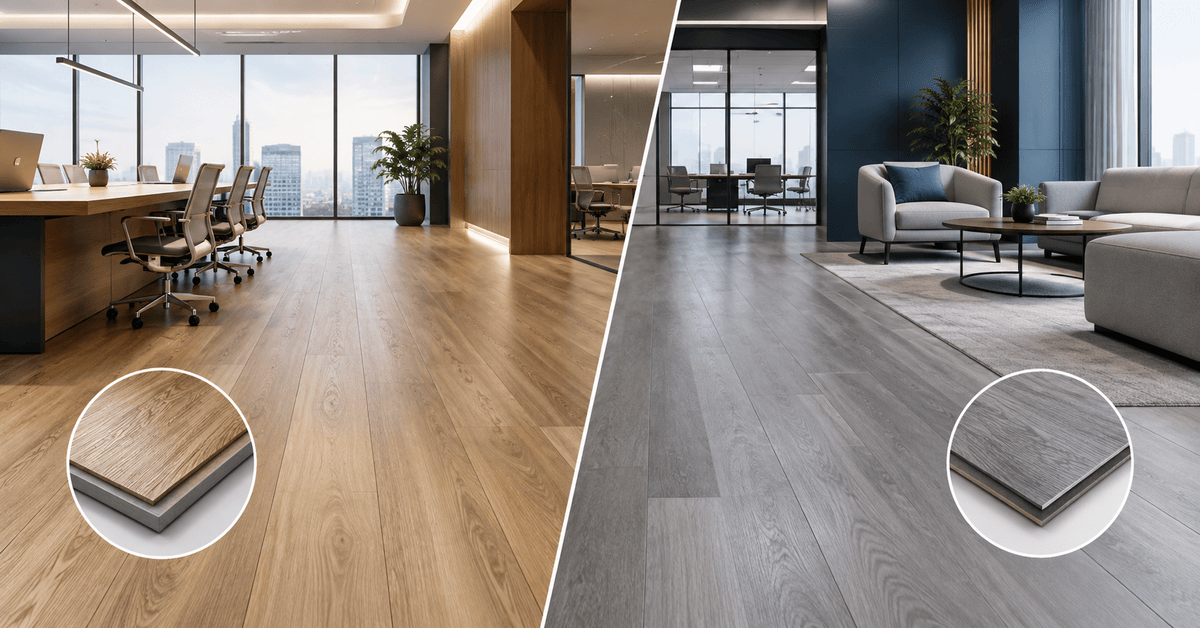
Flooring is one of those decisions that looks simple on a mood board and gets complicated fast once quotes start coming in. For commercial interiors in India, two resilient flooring options dominate the shortlist almost every time: SPC (Stone Plastic Composite) and vinyl flooring. Both look similar in a sample catalogue, both are marketed as “waterproof” and “durable,” and both come in a huge range of finishes. But they’re built differently, they perform differently under heavy office traffic, and choosing the wrong one for your project can mean redoing a floor within a few years. This guide breaks down SPC flooring vs vinyl flooring for India so you can make the call with your eyes open.
What Is SPC Flooring?
SPC flooring, or Stone Plastic Composite flooring, is a rigid flooring product made from limestone powder, PVC, and stabilisers. Its dense core provides durability and dimensional stability.
SPC flooring also includes a decorative layer and a protective wear layer that resists scratches, stains, and everyday wear.
Unlike flexible vinyl flooring, SPC planks retain their shape and are often installed with a click-lock system over a prepared subfloor. This makes installation efficient for residential and commercial spaces.
SPC flooring is suitable for offices that require durability, easy maintenance, and a premium appearance.
What Is Vinyl Flooring?
Vinyl flooring is made primarily from PVC (polyvinyl chloride) and is used in commercial and residential interiors. It is available as vinyl tiles, vinyl planks, and sheet flooring, with glue-down, loose-lay, and click-lock installation options.
LVT (Luxury Vinyl Tile) and LVP (Luxury Vinyl Plank) offer realistic wood and stone designs with improved durability. Vinyl flooring is moisture-resistant, easy to maintain, and available in various designs.
Compared with rigid-core options such as SPC flooring, vinyl flooring is widely used in Indian commercial interiors for offices, retail spaces, healthcare facilities, and hospitality projects.
SPC vs Vinyl: A Side-by-Side Comparison
| Factor | SPC Flooring | Vinyl Flooring (LVT) |
|---|---|---|
| Core structure | Rigid stone-plastic composite core | Flexible PVC layers |
| Water resistance | Fully waterproof core | Water-resistant; sheet vinyl performs best in wet zones |
| Subfloor tolerance | More forgiving of minor subfloor imperfections | Needs a smoother, well-prepped subfloor for best results |
| Underfoot feel | Firmer, more rigid underfoot | Softer, slightly more cushioned underfoot |
| Installation | Click-lock, floats over subfloor, generally faster | Glue-down, loose-lay, or click-lock depending on product |
| Best suited for | High-traffic commercial floors, lobbies, corridors | Cabins, meeting rooms, budget-driven fit-outs |
| Typical price position | Mid to slightly higher than standard vinyl | Wide range, generally more budget-flexible |
Durability and Maintenance Requirements
Busy offices require flooring that can withstand heavy foot traffic, rolling chairs, and moving furniture. SPC flooring’s rigid stone-plastic composite core generally provides better resistance to dents and indentation from concentrated or prolonged pressure.
Thinner or lower-grade vinyl flooring may be more prone to indentation under heavy loads. However, premium LVT with a thicker wear layer offers improved durability and scratch resistance, making it suitable for demanding commercial spaces.
Both SPC and vinyl flooring are easy to maintain. Regular sweeping or vacuuming followed by damp mopping is usually sufficient. Most products do not require polishing, sealing, or other extensive maintenance.
Installation Time and Project Disruption
SPC flooring with a click-lock system can be installed quickly using a floating method, with little or no adhesive curing time. This may allow earlier use, depending on the product and site conditions.
Vinyl flooring can also be installed quickly using click-lock or loose-lay systems. Glue-down vinyl requires adhesive curing before regular traffic.
Installation time depends on the flooring format, subfloor preparation, installation method, and site conditions.
Looking Beyond the Sticker Price
Compare SPC and vinyl flooring by total project cost, not just price per square foot. Include subfloor preparation, labour, adhesives, curing time, wastage, maintenance, and replacement costs.
For high-traffic areas such as reception areas, corridors, and lobbies, durable SPC may reduce replacement costs. For low-traffic areas such as private cabins and meeting rooms, vinyl may provide adequate performance at a lower initial cost.
Choose the flooring that best balances cost, installation requirements, durability, maintenance, lifespan, and intended use.
Common Commercial Flooring Mistakes to Avoid: SPC & Vinyl Flooring
Several common mistakes can affect the performance, appearance, and lifespan of commercial flooring, regardless of whether you choose SPC or vinyl flooring.
1. Skipping the Subfloor Moisture Check
One of the most important steps before installation is checking the subfloor for moisture. Installing flooring over a damp or inadequately prepared surface can trap moisture beneath the flooring, potentially leading to bubbling, lifting, adhesive failure, or other issues over time.
2. Choosing the Wrong Wear Layer
The wear layer should always match the expected level of foot traffic. For example, a 0.3 mm wear layer may be suitable for a low-traffic private cabin but may not provide sufficient protection in busy corridors, reception areas, or common workspaces. Selecting the appropriate wear layer helps improve durability and maintain the flooring’s appearance for longer.
3. Mixing Flooring From Different Batches
Shade and texture can vary slightly between production batches. Using flooring from different batches across a large office area without checking for colour consistency can result in noticeable variations after installation. Always verify the batch numbers and shade consistency before installation, particularly for large commercial projects.
By addressing these factors during the planning and installation stages, you can avoid unnecessary flooring problems and achieve a more consistent, durable, and professional finish.
Which One Should You Choose?
Choose between SPC and vinyl flooring based on traffic, installation requirements, maintenance needs, design preferences, and budget.
SPC flooring suits high-traffic areas such as reception areas, corridors, open workspaces, retail spaces, and cafeterias. Its rigid construction resists dents and provides dimensional stability.
Vinyl flooring, especially LVT, suits projects that prioritize design flexibility, comfort, affordability, and easy maintenance. It works well in private cabins, meeting rooms, and other low- to moderate-traffic areas.
The best option depends on the project’s specific requirements.
Getting the right flooring starts with choosing the right product for the application, not simply selecting the most attractive finish in a catalogue. Working with a supplier that offers both SPC and vinyl flooring can make it easier to compare performance, installation requirements, maintenance, and cost based on the actual needs of your project.
CIPL Group supplies SPC and vinyl flooring for commercial interiors, along with supporting flooring products such as skirting, adhesives, and underlayments. This makes it easier to coordinate the flooring package, streamline sourcing, and plan installation more efficiently.
FAQs
Is SPC Flooring More Expensive Than Vinyl?
Generally SPC sits at a similar or slightly higher price point than standard vinyl, though premium LVT can cost as much as or more than mid-range SPC it’s worth comparing specific product lines rather than the category as a whole.
Can SPC or Vinyl Flooring Be Installed Over Existing Tiles?
In many cases yes, provided the existing surface is flat, stable, and free of major damage but always get the subfloor assessed by the installer first, since uneven or damaged existing flooring can affect the final result regardless of which product is used.
Which Lasts Longer In A High-Traffic Commercial Space?
SPC generally has the edge in very high-traffic zones due to its rigid core, but a good-quality vinyl with a thick wear layer, properly installed and maintained, can also perform well for many years installation quality often matters as much as the product choice itself.
Is Either Option Suitable For Areas with Water Exposure, Like Pantries?
SPC’s fully waterproof core makes it a more straightforward choice for pantry or wet-adjacent zones; vinyl can work too, but sheet vinyl with sealed seams is generally preferred over tile or plank vinyl in those specific areas.
Recommeded Blogs

Best Flooring for Hospitals in India (2026): Types, Costs & NABH Requirements
In a hospital, the floor is not just a finish. It is part of infection control, patient safety and the building's running cost. Every day it takes trolley wheels, wheelchairs, spills, blood, disinfectants and thousands of footsteps. A wrong choice shows up fast: grout lines that hold bacteria, cracked tiles under stretchers, slippery corridors, or…
Which Flooring Is Best For Office Cabins?
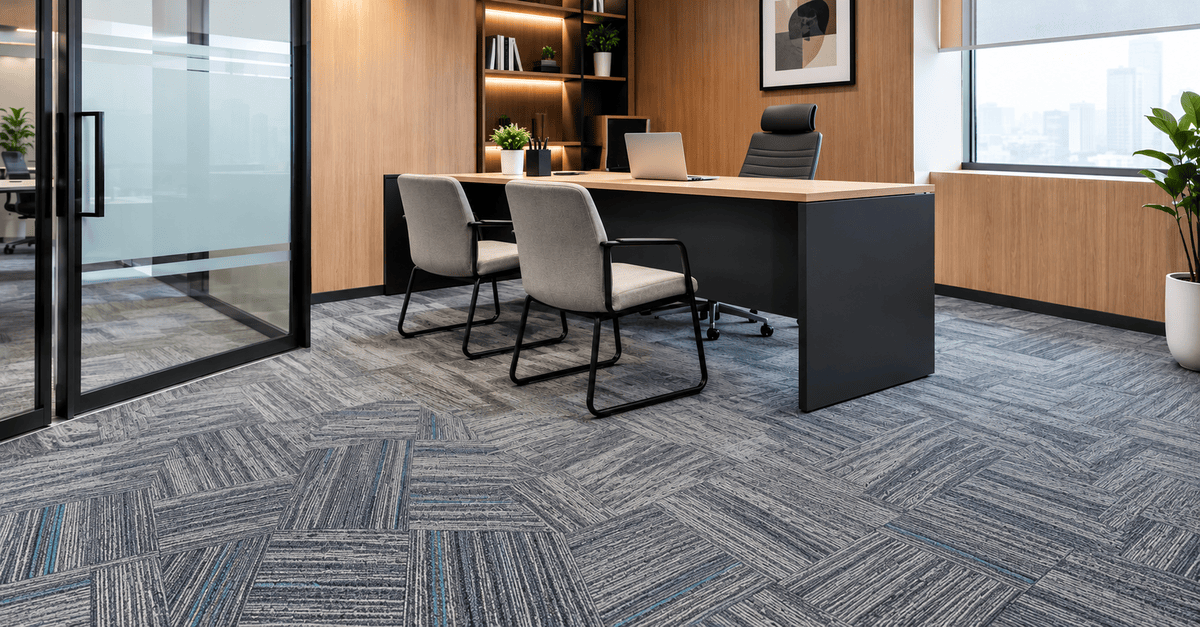
When designing an office cabin, most people focus on furniture, lighting, wall colours, and storage. But have you thought about how much difference the flooring can make? The right flooring can make an office cabin look more professional, feel comfortable, and stay in good condition for years. Whether you're designing a manager's cabin, a director's…
Best Ceiling Solutions In Delhi | CIPL Group
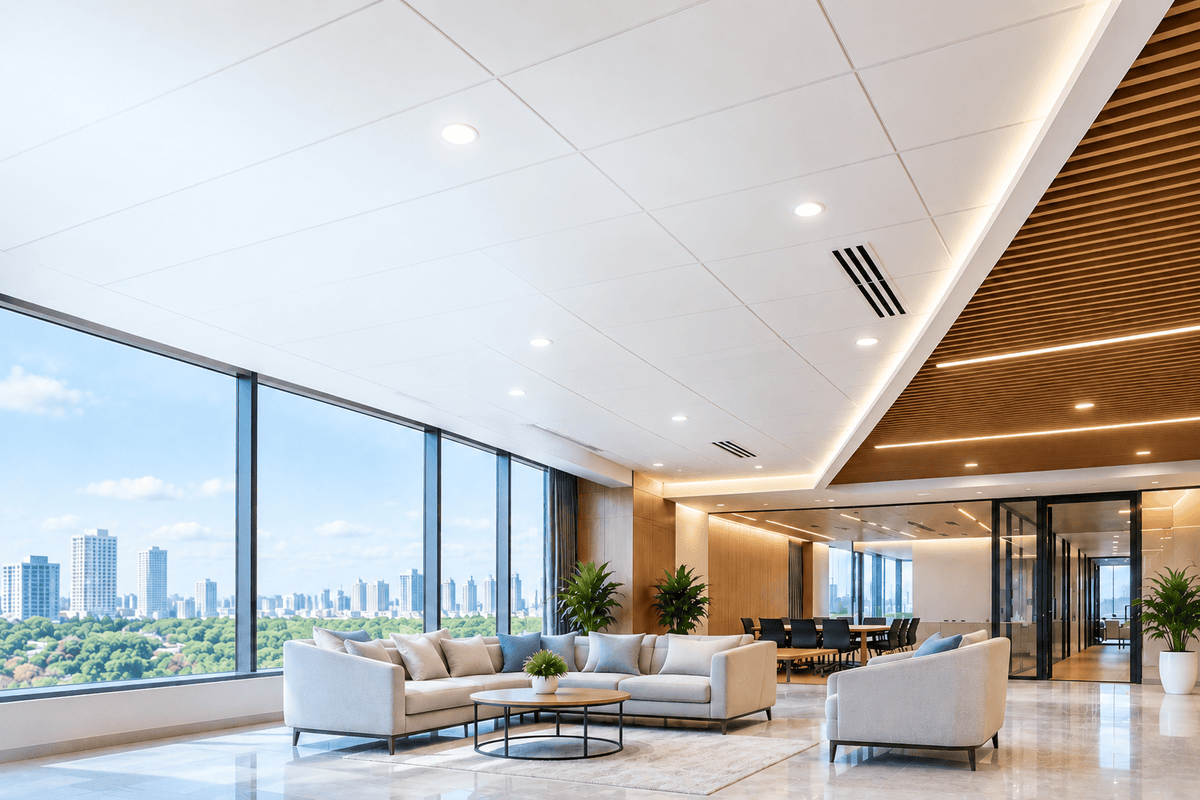
Choosing the best ceiling solutions in Delhi is an important step in creating functional, comfortable, and attractive interiors. Whether you are designing a corporate office, hotel, hospital, school, retail showroom, or residential property, the right ceiling system can improve the appearance of a space while helping manage lighting, acoustics, and building services. Today, architects, interior…